Rahul Tiwari

luxury car seat technology

Luxury Car Seat Technologies: Ventilation, Massage and Memory Functions

Luxury car seats now do three jobs beyond holding you in place. Ventilation uses small fans to move air through perforated upholstery, so your back doesn’t stick to the leather. Massage uses inflatable air cells, and on the newest cars vibration motors, to work your back and thighs. Memory stores your seat position, and usually your mirrors and steering wheel, so one button resets the car after someone else has driven it. In India, ventilation

Read More »
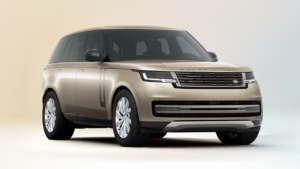
Range Rover active noise cancellation

Active Noise Cancellation in Luxury Cars: Technology Explained

Active noise cancellation (ANC) in a car works like noise-cancelling headphones. Microphones and vibration sensors detect unwanted sound, a processor calculates an opposite sound wave, and the car’s speakers play it so the two cancel out. It is best at low-frequency noise: engine boom, drivetrain drone and the rumble of tyres on a rough road. That makes it the other half of a quiet cabin, since acoustic glass mainly deals with higher-pitched wind noise. The

Read More »
BH series vs regular registration for a luxury EV, BMW i5 Long Wheelbase in India

BH Series vs Regular Registration for Luxury Cars: Who Is Eligible and When It Actually Saves Money

BH series registration suits salaried luxury car buyers who are likely to move states, and it’s a good deal mainly in high-tax states such as Karnataka or Tamil Nadu. You pay tax every two years instead of one large sum upfront, and you don’t need a new number after moving. It’s open to government and defence staff, PSU employees, and private employees whose company has offices in at least four states or UTs. It isn’t

Read More »
luxury car registration in India, BMW 7 Series and i7 at the India launch

Luxury Car Registration in India: Documents, Process, Timeline and the Decisions That Cost Lakhs

Registering a new luxury car in India takes one application on Form 20, filed within seven days of delivery with your insurance, address proof and the maker’s and dealer’s certificates. Your dealer normally files it through the Vahan portal. The paperwork is the easy part, and the fee is only a few hundred rupees. The expensive part is road tax, which can run from about Rs 19.5 lakh to about Rs 43 lakh on the

Read More »
air suspension vs adaptive suspension, Audi adaptive air suspension illustration

Air Suspension vs Adaptive Suspension in Luxury Cars: Key Differences

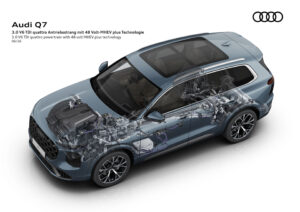
Air suspension and adaptive suspension solve different problems, and many luxury cars use both. Air suspension replaces steel coil springs with air springs, so the car can change its ride height and carry load better. Adaptive suspension keeps the springs and electronically changes how firm the dampers are, so the car can switch between soft and sporty. On Indian roads, height is what you’ll use most. Pick air for a chauffeur-driven car or a low

Read More »
BMW M340i

Electronic Limited-Slip Differential vs Mechanical Differential in Performance Cars

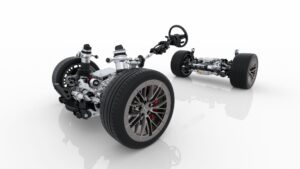
A mechanical limited-slip differential uses gears or clutch packs to limit wheelspin automatically, with no computer involved. An electronic limited-slip differential, or eLSD, uses an actuator and software to control those same clutches, so it can react faster and vary its locking by situation. The mechanical unit is simpler, cheaper and easier to repair. The electronic one is more precise and can be tuned through drive modes. One warning for buyers: some cars sold with

Read More »
014_Cayenne Turbo

Luxury Cars with Rear-Wheel Steering in India: Models and Benefits

In India, rear-wheel steering is found almost entirely on cars above Rs 1 crore. The list as of November 2026 includes the Lexus RX 500h F-Sport+, Porsche Cayenne Electric (as an option), BMW 7 Series and i7, Mercedes-Benz S-Class, Range Rover and Range Rover Sport, Audi RS Q8 Performance, Lamborghini Urus, Lotus Eletre R and Rolls-Royce Cullinan. Its main benefit here is a tighter turning circle in basements, U-turns and narrow lanes, with a secondary

Read More »
TPMS display

Tyre Pressure Monitoring Systems in Luxury Cars: Direct vs Indirect TPMS

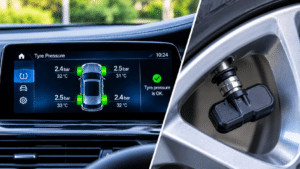
Direct TPMS uses a battery-powered pressure sensor inside each wheel and reports real readings to the dash. Indirect TPMS has no sensors of its own. It uses the ABS wheel-speed sensors to spot a tyre that’s turning faster than the others because it has lost air. Direct is more accurate and shows actual pressure, but sensors cost money and their batteries last about five to ten years. Indirect costs little and needs no battery, but

Read More »
Volvo

Luxury Car Cabin Air Purification Systems: Features and Technology

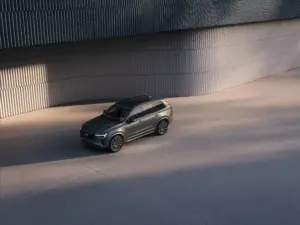
A luxury car’s cabin air system cleans incoming air with a multi-layer filter, then adds sensors, ionisers or hydroxyl generators, and often a pre-entry cleaning function. The top systems are serious kit. Mercedes’s ENERGIZING AIR CONTROL Plus on the EQS removes over 99.65 percent of particles, while Volvo’s Advanced Air Cleaner blocks up to 95 percent of PM2.5 and shows you the reading on screen. In Delhi-NCR’s winter, this is a genuine health feature, as

Read More »
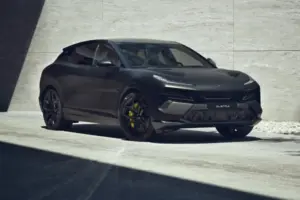
Lotus Eletre

Lotus Eletre Review India: A 905hp Rarity That Now Has a Porsche Problem

The Lotus Eletre is a fast, rare and properly luxurious electric SUV, priced in India from Rs 2.55 crore to Rs 2.99 crore ex-showroom. It’s easy to like and harder to recommend than it was at launch. In 2023 it was close to a class of one. Now the Porsche Cayenne Electric Turbo costs Rs 2.27 crore, makes more power and has a larger network behind it. Our view: buy the Eletre only if its

Read More »