
Air suspension and adaptive suspension solve different problems, and many luxury cars use both. Air suspension replaces steel coil springs with air springs, so the car can change its ride height and carry load better. Adaptive suspension keeps the springs and electronically changes how firm the dampers are, so the car can switch between soft and sporty. On Indian roads, height is what you’ll use most. Pick air for a chauffeur-driven car or a low one that has to clear speed breakers. Pick coil springs with adaptive dampers if you drive yourself and want lower running risk.
The key difference in one table
| Air suspension | Adaptive suspension | |
| What changes | The spring | The damper |
| Main hardware | Air springs, compressor, valve block, height sensors | Electronically controlled dampers, usually with coil springs |
| Ride height adjustable | Yes | No |
| Firmness adjustable | Only if paired with adaptive dampers | Yes |
| Best at | Comfort, clearance, load levelling | Body control, range between comfort and sport |
| Weak point | Age: rubber, leaks, compressor | Control system and damper replacement |
CarExpert’s explainer puts it simply: adaptive dampers keep coil springs and change resistance through a flow valve, while air suspension swaps the coils for inflatable membranes and uses a compressor and height sensors.
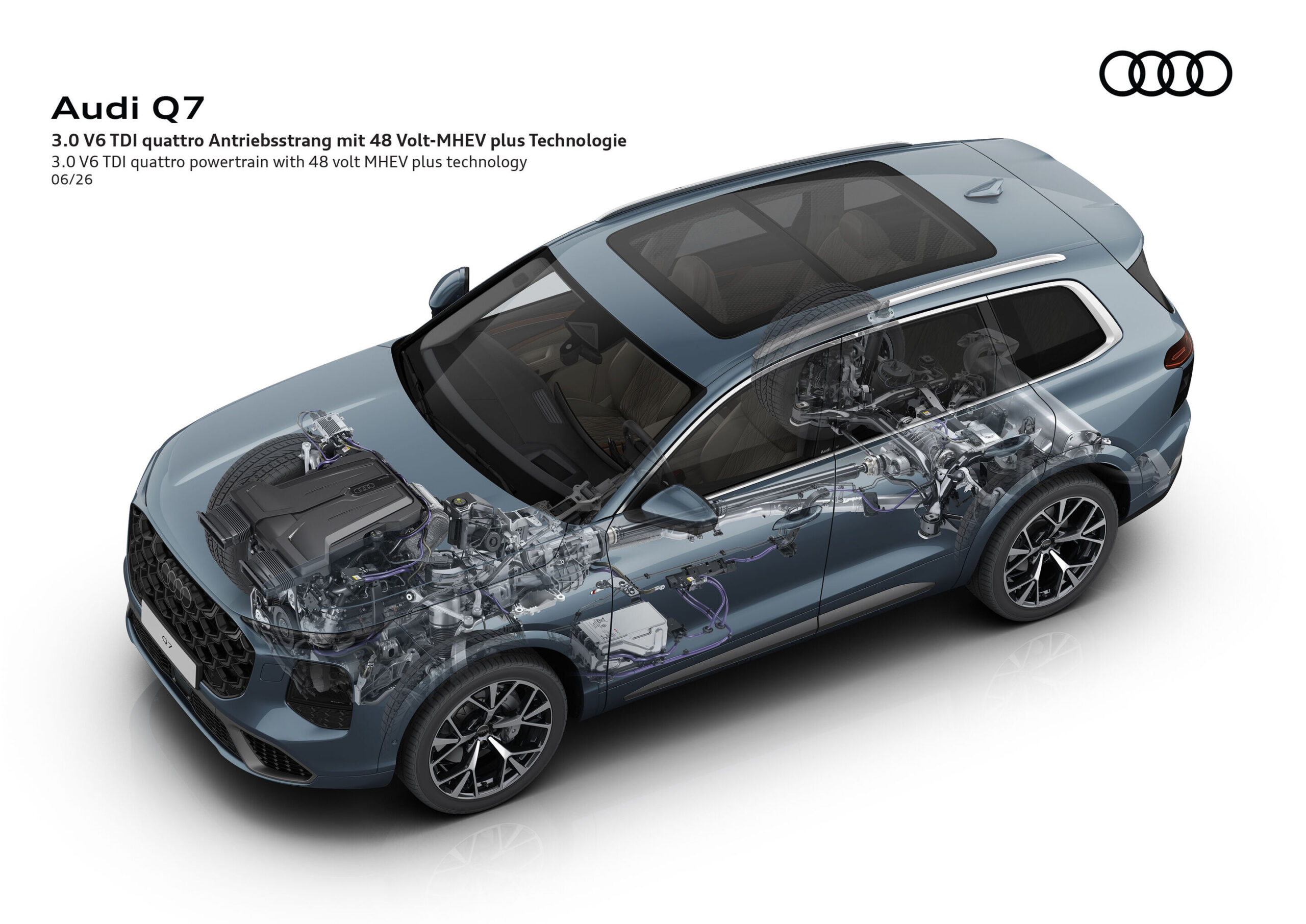
The confusion comes from marketing. evkx.net, a technical reference, notes that makers sometimes bundle adaptive dampers with air springs under a single “adaptive suspension” name. Audi calls the Q7’s setup adaptive air suspension, which is both. So ask this first: does the car have air springs, adaptive dampers, or both?
How adaptive suspension works
Sensors track what the wheels and body are doing, and a controller changes the flow through each damper. Open the valve and the car rides softer. Close it and it firms up. Some systems use motor-controlled valves, and others, such as Audi’s Magnetic Ride Control, use a fluid that thickens in a magnetic field. CarExpert says electromagnetic systems respond faster than mechanical ones.
What adaptive dampers can’t do is just as important. They don’t change the spring rate or lift the car. If your driveway ramp scrapes in Comfort mode, it scrapes in Sport as well.
How air suspension works
Each corner sits on a rubber air spring. A compressor adds air, a valve block sends it to the right corner, and height sensors keep the car level. So you can raise the car for a steep speed breaker or a flooded street, then lower it on the highway.
Air doesn’t automatically mean plush, though. The springs handle the height, and the dampers still control the bounce. That’s why the most capable cars combine air springs with adaptive dampers.
What’s on the cars you’re shopping for
These listings are from Autocar India’s India specification pages. Check your exact variant.
| Car | Springs | Damper control | Ride height adjustable |
| BMW M340i | Coil | Yes | No |
| Porsche Macan | Coil | Yes | No |
| Range Rover Velar Dynamic SE | Coil | Check variant | No |
| Mercedes-Benz GLE | Air | Yes | Yes |
| BMW X5 | Air | Yes | Yes |
| BMW 7 Series | Air | Yes | Yes |
| Audi Q7 | Air | Adaptive air suspension | Yes |
| Mercedes-Benz S-Class | Air (AIRMATIC) | Adaptive | Yes |
| Range Rover, Range Rover Sport | Air | Check variant | Yes |
Look at the BMW M340i. It has adjustable dampers and just 130mm of ground clearance on Autocar’s page, with no way to raise it. You can make it softer, but you can’t lift it over a tall speed breaker. An X5 owner can do both.
Which is better on Indian roads?
For comfort on bad roads, air usually wins, mainly because the car can be set up softly and can rise to protect the underbody. That said, potholes are the harder test. A sharp pothole is a damper and tyre problem as much as a spring problem, so a well-tuned coil car on sensible tyres can ride better than an air car on 22-inch wheels.
For keen drivers, adaptive dampers on coil springs are usually enough. Our view is that a Macan or M340i owner driving his own car doesn’t lose much by skipping air. You get a sharp mode for the ghats and a softer one for the commute, with less to go wrong.
For chauffeur-driven cars, air is worth having, and on the big limousines you don’t get a choice. Rear-seat passengers feel the difference at city speeds, and access-height modes also help older passengers get in.
For farmhouses and flooded roads, height is the feature. Land Rover’s and Mercedes’s raised settings are the reason these SUVs cope. If that’s your use, buy air.
What does each cost to own?
This is where a used-car buyer should pay attention. Coil springs are simple. Adaptive dampers cost more than ordinary ones, but we couldn’t find published Indian prices from a trusted source, so ask for a part-numbered quote.
Air suspension has more parts that age. In our air suspension problems guide, one W221 S-Class owner on Team-BHP estimated about Rs 2.5 lakh per strut and around Rs 12 lakh for all four with related parts on a ten-year-old car. A single sensor or air line is far cheaper, which is why early action matters.
So our rule is about age. On a new car under warranty, take the air suspension and enjoy it. On a car over about seven years old, out of warranty, keep a repair reserve or choose coil springs. Either way, get a workshop scan before you buy any car from Motozite’s pre-owned listings, and see it after an overnight park on level ground.
What about active suspension?
That’s a further step. Mercedes’s E-Active Body Control, which CarExpert describes as combining air suspension with hydropneumatics for finer control at each wheel, and the predictive systems that scan the road ahead go beyond either setup. They’re the top of the range and they’re worth a separate look if you’re shopping at that level.
Our verdict
Decide by use. Self-driven car, good roads, sporty intent: coil springs with adaptive dampers. Chauffeur-driven, low car, poor roads or a raised driveway: air. And if you can have both on a new car under warranty, take both.
FAQ: air suspension vs adaptive suspension
What is the difference between air suspension and adaptive suspension?
Air suspension replaces steel springs with air springs, so it can change ride height. Adaptive suspension electronically changes the firmness of the dampers, usually with steel coil springs. Many luxury cars combine both, so check which hardware a specific car has instead of relying on the name.
Can adaptive suspension change ride height?
No. Adaptive dampers change firmness, not height. To raise or lower the car, you need air suspension or another height-adjustable system. That’s why a car like the BMW M340i can soften its ride but can’t lift over a tall speed breaker.
Is air suspension better than adaptive suspension?
They do different jobs. Air is better for comfort, clearance and load levelling. Adaptive dampers on coil springs suit self-driven sporty cars and have fewer ageing parts. The best-riding luxury cars usually use both, and they cost more to repair as they age.
Which is better for Indian roads?
If you face steep speed breakers, flooded streets or a low car, air suspension’s height control is the most useful feature. If your roads are decent and you drive yourself, adaptive dampers on coil springs are usually enough, and they carry less long-term repair risk.
Is air suspension expensive to repair in India?
It can be, especially on older cars. One Mercedes S-Class owner on Team-BHP estimated about Rs 2.5 lakh per strut and about Rs 12 lakh for all four on a ten-year-old car. A sensor or air-line repair costs much less if it’s caught early.
Do cars with air suspension also have adaptive dampers?
Many do. Autocar India lists damper control as well as air springs on the Mercedes-Benz GLE, BMW X5 and BMW 7 Series, for example. The two work together: springs set the height, and dampers control the movement. Confirm the setup on your specific variant.
