
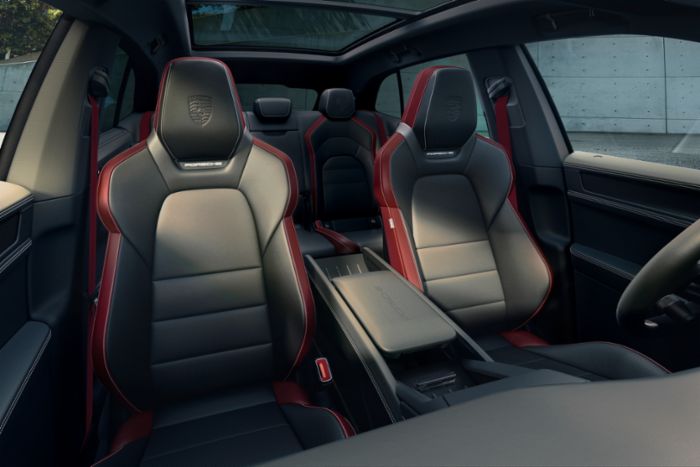
The number in “14-way power seat” counts directions of movement, not motors or features. Each adjustment usually moves two ways: forward and back is two ways, up and down is two more. So a 4-way seat typically slides and reclines, an 8-way seat adds height and cushion tilt, and 14-way, 18-way and 20-way seats add things like thigh support, lumbar, side bolsters and upper backrest adjustment. A bigger number gives you finer control over fit, but there’s no industry standard for how brands count, so compare what the seat actually adjusts rather than the headline figure.
How seat “ways” are counted
Think of each adjustment as a switch with two directions. Slide the seat forward: one way. Slide it back: a second way. That’s why seat numbers are almost always even.
Here’s how the count builds up on a typical luxury car seat. Brands mix and match these, so treat it as a guide, not a rule:
| Seat rating | What it usually adds | Running total |
| 4-way | Fore and aft (2), backrest recline (2) | 4 |
| 8-way | Seat height (2), cushion tilt (2) | 8 |
| 10 to 12-way | Lumbar in and out (2), lumbar up and down (2) | 10 to 12 |
| 14-way | Cushion extension for thigh support (2), plus headrest or upper backrest (2) | 14 |
| 18-way | Side bolsters on the cushion and backrest (4) | 18 |
| 20 to 24-way | Upper backrest or shoulder support, extra bolster zones, more headrest movement | 20 to 24 |
Porsche’s own line-up is a clean example of the ladder. The Panamera comes with 8-way comfort seats, offers 14-way comfort seats with extra settings, and 18-way adaptive sports seats with raised side bolsters for lateral support. A Porsche dealer describes the 14-way step as adding cushion depth and angle adjustment along with memory for seats, mirrors and steering wheel, and the 18-way as adding adjustable bolsters.
Ways vs motors: why the numbers don’t match
A seat’s “way” count and its motor count are different things. The current Mercedes-Benz S-Class front passenger seat has up to 19 motors, according to Mercedes: eight for adjustment, four for massage, five for ventilation, one for the lumbar pump and one to move the rear-seat screen. Only some of those motors move the seat at all.
The reverse also happens. One motor can drive two directions, and some movements are linked, such as a cushion that tilts as it rises. That’s why two seats with the same “way” number can feel very different.
There’s no standard for counting
Carmakers decide what counts. Some include the lumbar support in the headline number, others list it separately. A Porsche dealer, for example, describes the 8-way Comfort Seat as having height, tilt, backrest and fore-aft adjustment plus 4-way lumbar support. Count the lumbar and it’s 12 ways. Leave it out and it’s 8.
Some brands skip the number altogether. Volvo’s support pages for the XC90 simply list what the seat does: seat position, seat height, backrest tilt, cushion tilt, lumbar support and an extending cushion. That’s more useful than any number, and it’s the list we’d ask a dealer for.
What luxury cars in India offer
| Car (India) | Front seat rating | What stands out |
| Lexus RX 350h | 10-way power with memory | Heated and ventilated front and rear seats |
| Maserati Grecale GT | 10-way power with memory | Ventilated seats are an option on many cars, per Autocar India |
| Porsche Cayenne Electric | 8-way standard, 14-way and 18-way optional | Memory on both front seats only with the 14-way option |
| Volvo XC90 | Power seats with lumbar and cushion extension | Massage and ventilation standard up front |
| Range Rover HSE (Made in India) | 24-way | Heated and cooled, hot stone massage |
| Mercedes-Benz S-Class | Up to 19 motors per front seat | Executive rear seats recline to 43.5 degrees |
| BMW 7 Series | Multifunction seats standard | Executive Lounge rear reclines to 43 degrees |
Sources: Lexus India and Autocar India listings used in our earlier reviews, Porsche Newsroom, Volvo Cars support, Land Rover India, Mercedes-Benz and BMW Group India. Global press material may not match India-spec cars, so check your variant.
Which adjustments actually matter?
Not every extra “way” is equally useful. In our experience, these are the ones that change how a seat feels after two hours:
Cushion extension (thigh support). If you’re tall, this is the single most important adjustment beyond the basics. It slides the front of the cushion forward so your thighs are supported. Volvo makes this point itself, calling cushion extension a bonus for drivers with long legs.
4-way lumbar. Two-way lumbar only pushes in and out. Four-way also moves the support up and down, so it sits where your lower back actually curves. For anyone with back trouble, this matters more than massage.
Cushion tilt. Lets shorter drivers sit closer to the pedals without the front edge of the seat digging into their legs.
Side bolsters. Great on a ghat road, less so in daily traffic. Some owners find heavily bolstered sports seats too tight, so sit in one for at least 20 minutes before ticking the option.
Upper backrest and shoulder support. Found on 20-plus-way seats. It lets the top of the backrest angle forward independently, which helps when you’re reclined and still want your head supported.
Our view: Don’t pay for a higher number. Pay for cushion extension, 4-way lumbar and memory. A well-designed 14-way seat with those three will suit most drivers better than a 20-way seat you’ll never fully set up.
Rear seats matter more in India
Many Indian luxury car owners sit in the back, so the rear seat’s adjustment can matter more than the front’s. Here the numbers are about recline and leg support rather than “ways”. The 2026 Mercedes-Benz S-Class’s executive rear seats recline to 43.5 degrees, according to Autocar India. BMW India says the 7 Series’ Executive Lounge rear seat reaches a torso angle of up to 43 degrees by adjusting the backrest and its upper section together.
If you’re chauffeur-driven, ask the dealer three things: does the rear seat recline electrically, is there a leg rest, and can the front passenger seat slide forward to free up legroom? BMW India confirms the 7 Series front passenger seat can slide fully forward for exactly this reason.
Buying a pre-owned car with multi-way power seats
More motors means more things to check. On a test drive, run every adjustment through its full range, both directions. Listen for grinding or clicking, and watch for a movement that stops short or runs slowly. Save a memory position, move the seat, then recall it.
When you’re comparing pre-owned luxury cars on Motozite, ask the seller for the exact seat specification, because a “14-way” option may not be fitted to every car of that model. If a seat motor is faulty, get an authorised workshop quote before you agree a price.
For more on what goes into a comfortable seat, see our companion guide to ventilation, massage and memory functions in luxury car seats.
FAQ: power seat adjustment explained
What does 14-way power seat mean?
A 14-way power seat can move in 14 directions. Each adjustment usually counts as two ways, such as forward and back. A typical 14-way seat combines the basic 8-way movements (slide, height, recline, cushion tilt) with lumbar support, cushion extension, and sometimes headrest or upper backrest adjustment.
What is the difference between 8-way and 14-way seats?
An 8-way seat adjusts forward and back, up and down, backrest recline, and cushion tilt. A 14-way seat adds six more directions, usually lumbar support and cushion extension for thigh support. On Porsche’s cars, for example, the 14-way Comfort Seat also brings memory for both front seats.
What does 4-way lumbar support mean?
Four-way lumbar support moves the lower-back support in and out and also up and down. Two-way lumbar only moves in and out. Four-way lets you position the support where your spine actually curves, which matters more on long drives.
Is a 20-way seat better than a 14-way seat?
Not automatically. A 20-way seat adds adjustments such as side bolsters or upper backrest tilt, which help some drivers and not others. What matters most for comfort is cushion extension, 4-way lumbar and memory, and plenty of 14-way seats have all three.
Are ways the same as motors in a seat?
No. “Ways” count directions of movement, while motors are the hardware. One motor can drive two directions, and some motors run massage or ventilation rather than moving the seat. The Mercedes S-Class front passenger seat has up to 19 motors, but only eight of them adjust the seat.
Do power seats count the headrest and lumbar in the total?
It depends on the carmaker, because there’s no standard. Some include lumbar and headrest adjustment in the headline figure and others list them separately. Ask for the list of what the seat adjusts rather than relying on the number.
