
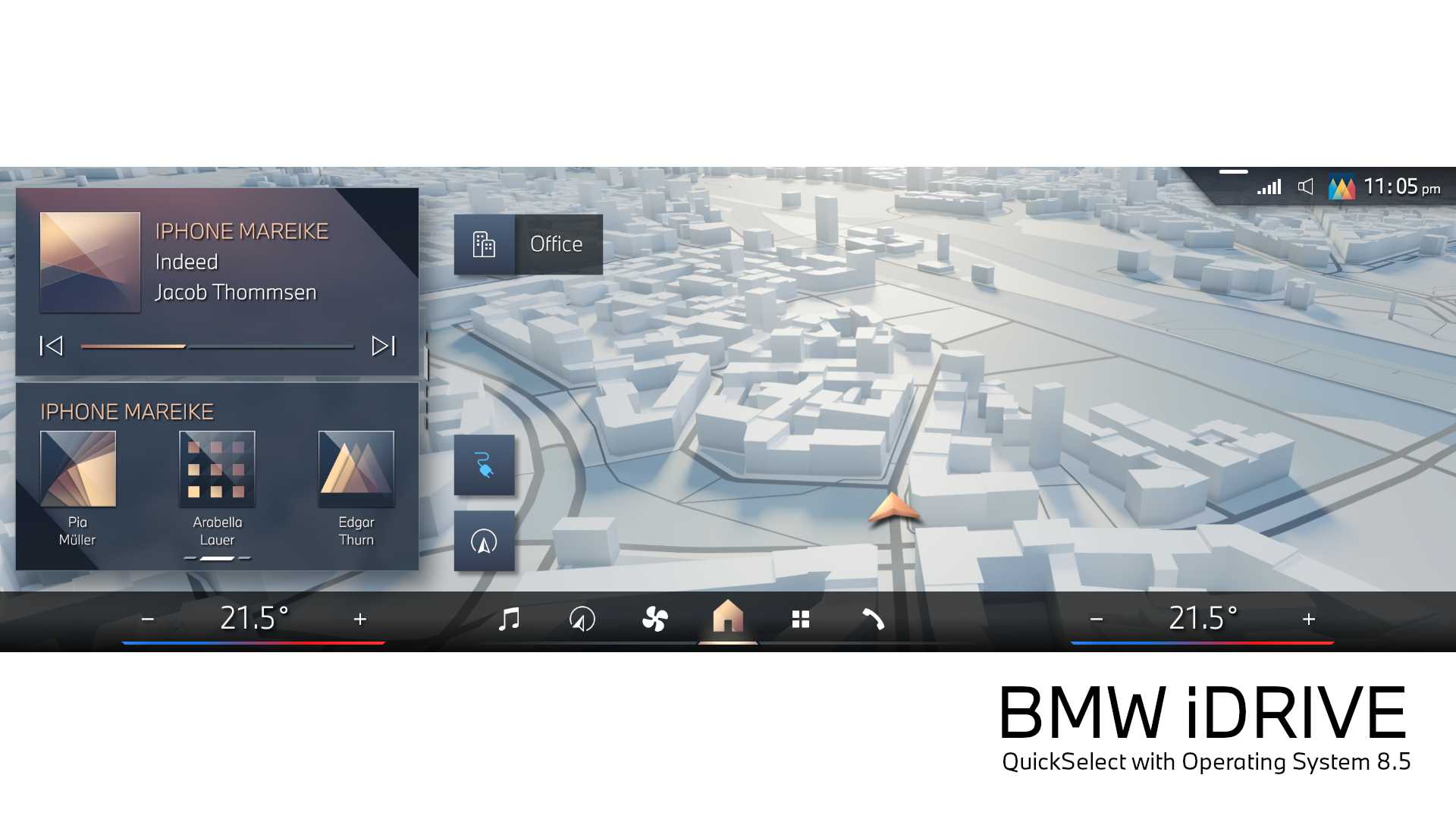
If you drive yourself, BMW’s iDrive is still the easiest of the three to use on the move, as long as the car you buy keeps the rotary controller (the 5 Series and the new X3 do; the X1 does not). Mercedes-Benz MBUX, in its third-generation form on the E-Class, has the best screens, the most features and the best voice assistant, but it puts too much behind touch-sensitive buttons. Audi MMI is the system in transition: the Q7 still runs the older two-screen layout, while the new Q3 has moved to a single curved screen built on Android Automotive. The bigger lesson for an Indian buyer is that the badge tells you less than the model year. Each brand has two or three generations of software in its showrooms right now, and they behave very differently.
The short answer: which system, in which car
| BMW iDrive | Mercedes-Benz MBUX | Audi MMI | |
| Versions on sale in India | Operating System 8.5 and Operating System 9 | Third-gen MBUX; MB.OS on the newest EVs | MMI touch response (two screens); new MMI on Android Automotive |
| Where you meet each | OS 8.5: 5 Series LWB, i5 LWB. OS 9: X1, X1 LWB, iX1 LWB, X3 | Third-gen MBUX: E-Class LWB. MB.OS: CLA Electric, GLC Electric | Older MMI: Q7. New MMI: 2026 Q3 |
| Software base | OS 8.5 on Linux; OS 9 on Android Open Source Project | Mercedes’ own software; MB.OS developed in-house | Android Automotive OS on new models |
| Physical controller | Rotary controller on 5 Series and X3; none on X1 | Touchpad and touch-sensitive steering buttons | Haptic touchscreens; no rotary dial |
| Strongest point | Usable without looking, on cars with the dial | Screen quality, features, voice control | New Q3 screen cuts glare; Q7 haptics are reassuring |
| Weakest point | Busy menus on OS 8.5; climate in the screen | Fiddly touch controls; climate two taps deep | Old Q7 interface feels dated; new Q3 puts everything in the screen |
BMW iDrive: the controller is the whole story
BMW invented the rotary controller with the 2001 7 Series, and it remains the single best reason to pick a BMW if you dislike jabbing at screens on a broken road. The problem is that BMW is now quietly retiring it.
In India today you will find two versions of the software. Operating System 8.5 runs on the larger cars, including the 5 Series LWB, which pairs a 14.9-inch touchscreen and a 12.3-inch driver display under one curved glass panel. BMW says OS 8.5 continues to be based on Linux. Operating System 9 runs on the compact cars and the new X3. BMW describes it as an in-house system built on Android Open Source Project software for the first time. Both share the same QuickSelect home screen, which BMW calls a zero-layer layout: the main functions sit on one level so you don’t have to dig into submenus.
The catch is the hardware around the software:
- 5 Series LWB and i5 LWB (OS 8.5): keep the rotary controller and a volume roller. Autocar India found the OS 8.5 interface can feel cluttered and complex, and the aircon controls now live in the touchscreen.
- X3 (OS 9): BMWBlog calls the new X3 the first BMW to combine OS 9 with the rotary knob. Autocar India’s X3 review confirms India-spec cars have the crystal iDrive controller on the console. For a self-driven owner, this is the best-balanced BMW cabin on sale.
- X1, X1 LWB and iX1 LWB (OS 9): no rotary controller. Autocar India rates the X1 LWB’s 10.7-inch touchscreen as crisp and responsive, but lists “complicated infotainment” among its reasons to think twice.
The direction is clear. BMW’s next system, Panoramic iDrive with Operating System X, drops the controller entirely, and Auto Express reported BMW’s reason: data from over a million opted-in drivers showed the dial was being used less and less. Autocar India expects the first car with it, the iX3, in India in early 2027.
Voice is BMW’s weak spot. In its i5 review, Autocar India said BMW’s voice commands still lag behind Mercedes’ MBUX and Volvo’s Google-based assistant.
Mercedes-Benz MBUX: the best screens, the most frustrating buttons
MBUX arrived in India with the GLC in December 2019, and the current E-Class LWB is where the third generation shows what it can do. Mercedes-Benz India confirmed in November 2024 that the MBUX Superscreen is standard on all E-Class variants (E 200, E 220d and E 450 4Matic). Per Autocar India, it combines a 12.3-inch driver display, a 14.4-inch central touchscreen and a 12.3-inch passenger screen.
On quality, nobody in this segment is close. Autocar India’s first drive compared the screen’s clarity, speed and ease of use to the latest Teslas. The third-gen software also brought a new layer that lets Mercedes add third-party apps. At the E-Class’s global launch the list included TikTok, Angry Birds, Webex, Zoom and the Vivaldi browser, plus a dashboard selfie and video camera for calls when the car is parked. App line-ups vary by market, so check with the dealer which ones are live on an Indian car.
The complaints are consistent, and they come from the people who drive these cars every day. Autocar India’s review notes that climate controls are now only in the touchscreen and take a couple of prods to reach, and that the haptic steering and seat controls give almost no feedback. Its 13,000km long-term report on an E 220d still calls the steering-mounted touch controls “frustratingly unresponsive”, adding that Mercedes has fixed this on its newest models.
Those newest models run MB.OS, Mercedes’ own operating system. In India it started with the CLA Electric in April 2026, and on 4 November 2026 the GLC Electric followed at Rs 78.5 lakh (ex-showroom), built in Pune, with a 39.1-inch MBUX Hyperscreen spanning the dashboard. We cover what MB.OS changes under the skin in our guide to software-defined vehicles.
The chauffeur question. India buys the E-Class largely to be driven in, which makes one detail matter: the passenger screen is for the front passenger, not the rear. Autocar India’s E 450 review made the same point about the selfie camera, saying one for rear passengers might have been more useful. If you sit in the back, the Superscreen is something you look at, not something you use.
Audi MMI: two generations, two very different experiences
Audi gave up its rotary MMI dial years ago. On the Q7 sold in India, Autocar India counted three screens: a 10.1-inch infotainment display, a lower screen for climate control and the Virtual Cockpit dials. The two touchscreens use haptic feedback, so the glass clicks back when you press it, which helps. The downside is that the lower screen forces your eyes off the road for simple adjustments. Autocar India’s December 2024 Q7 review called the click-based interface not very modern and wanted wireless Apple CarPlay and Android Auto.
The new generation starts with the third-gen Q3, launched in India on 16 October 2026 at Rs 51.99 lakh for the Nova and Rs 55.99 lakh for the Zenith (ex-showroom), according to Autocar India. It has an 11.9-inch driver display and a 12.8-inch touchscreen under one curved panel. Audi says the global car runs Android Automotive OS, and Autocar India’s review found that the curvature cuts glare and reflections, a real benefit under Indian sun. The trade-off is that almost everything now lives in that screen.
Larger Audis with the full “Digital Stage” layout (a curved OLED panoramic display plus a passenger screen) are already on sale abroad in the new Q5, A5 and Q6 e-tron. Autocar Professional reports that the A5 sedan and the flagship Q9 are next in Audi India’s line-up. Audi says its in-car app store is integrated into the MMI and works without a smartphone, but that the app portfolio is market-specific.
Head to head: what matters day to day
Ease of use while driving. BMW wins, but only in cars with the dial (5 Series, X3). Without it, the X1 is no easier than its rivals. The old Audi haptic screens come second for their confirmation click. Mercedes is last, purely because of its touch-sensitive buttons.
Screen quality and features. Mercedes, clearly. The E-Class Superscreen and the GLC Electric’s Hyperscreen set the benchmark.
Voice assistant. Mercedes ahead of BMW, on Autocar India’s assessment, which uses Volvo’s Google-based assistant as the reference point.
Phone mirroring. All three support Apple CarPlay and Android Auto. Check whether it is wireless on the exact car you are looking at, because older models such as the Q7 have been criticised for not offering it. If you mostly use your phone’s apps anyway, read our companion guide on Android Automotive vs Apple CarPlay.
Updates. All three brands send over-the-air updates, but what arrives in India varies. Our OTA updates guide covers what each brand has actually delivered.
Buying pre-owned: check the software generation, not just the badge
Infotainment ages faster than anything else in a luxury car, so on a used car it is worth knowing which generation you are getting. A few practical checks:
- Know the version. A 2023 X1 and a 2025 X3 are both “iDrive”, but they don’t share the same hardware. BMWBlog reported that OS 9 needs a new head unit, so it was never offered as an over-the-air update to X1s built before the switch.
- Test the physical controls. Use the steering buttons, the climate menu and the touchscreen on a rough road during the test drive, not in the showroom.
- Confirm phone mirroring. Plug in your own phone and check whether CarPlay or Android Auto works wirelessly.
- Ask about the software status. An authorised workshop can tell you if the car is on current software and whether connected services are active.
If you are comparing pre-owned luxury cars on Motozite, put these questions to the seller before you commit. Shopping new instead? Browse new luxury cars by brand and model.
Our verdict
For a driver, the BMW X3 with Operating System 9 and the rotary controller is the most usable infotainment setup in this group, and it may be the last new BMW to have that combination. For a buyer who wants the most impressive cabin and will live with its quirks, Mercedes MBUX on the E-Class or GLC Electric is the one to have. Audi’s new Q3 is a big step forward for the brand, but judge the bigger Audis only once their new-generation versions reach India.
FAQ: luxury car infotainment systems
Which is better, BMW iDrive or Mercedes MBUX?
It depends on how you use the car. BMW iDrive is easier to operate while driving on models that keep the rotary controller, such as the 5 Series LWB and the new X3. Mercedes MBUX has sharper screens, more features and a better voice assistant, but its touch-sensitive steering and seat controls are harder to use on the move.
Does the BMW X1 have an iDrive controller?
No. The current BMW X1, X1 LWB and iX1 LWB in India run BMW Operating System 9 through a 10.7-inch touchscreen and voice control, with no rotary controller. The new BMW X3 runs the same operating system but keeps the physical iDrive controller.
Is BMW iDrive 9 based on Android?
Partly. BMW says Operating System 9 is its own system built on Android Open Source Project software, the open-source base of Android. It does not include Google’s in-car services such as Google Maps and the Play Store. Bigger BMWs such as the 5 Series run Operating System 8.5, which BMW says is Linux-based.
What is the MBUX Superscreen in the Mercedes E-Class?
The Superscreen is the three-display setup on the India-spec E-Class LWB: a 12.3-inch driver display, a 14.4-inch central touchscreen and a 12.3-inch front-passenger screen. Mercedes-Benz India confirmed it is standard on the E 200, E 220d and E 450 4Matic.
Does the new Audi Q3 run Android Automotive?
Audi says the third-generation Q3’s infotainment uses Android Automotive OS, shown on a 12.8-inch touchscreen alongside an 11.9-inch driver display. The Q3 launched in India on 16 October 2026 from Rs 51.99 lakh ex-showroom. Audi says the in-car app portfolio varies by market.
Do BMW, Mercedes and Audi support Apple CarPlay and Android Auto in India?
Yes, all three support both. Whether the connection is wireless depends on the model and generation, so check it on the specific car, especially on older or pre-owned models. Some cars, such as Audi’s latest models, can also run apps directly in the car without a phone.
