
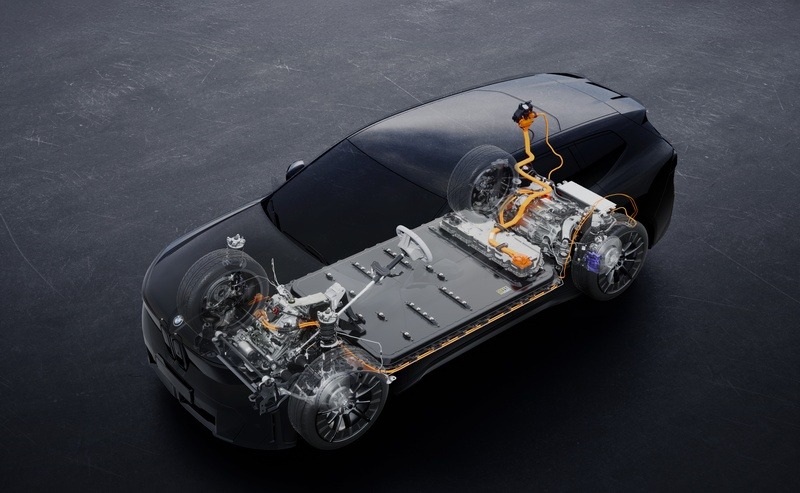
A software-defined vehicle (SDV) is a car whose features are controlled mainly by software running on a handful of powerful central computers, rather than by dozens of separate control units each fixed at the factory. Because the software is separate from the hardware, the carmaker can change how the car looks, sounds, assists and even drives long after you take delivery. In India, the Mercedes-Benz CLA Electric (launched April 2026) is the first Mercedes here on the new MB.OS operating system, BMW’s Neue Klasse iX3 is due in early 2027, and Mahindra’s MAIA-based EVs already show the idea working at a much lower price. For a luxury buyer, this changes what you are paying for. You are buying hardware, plus a promise about software. Only one of those is guaranteed on delivery day.
From 100 control boxes to a few computers
To see why this is a big shift, look at how cars were built until recently. Each function got its own electronic control unit (ECU): one for the seats, one for the windows, one for the engine, one for parking sensors, and so on. A traditional car can contain dozens, or more than 100, ECUs, each responsible for one narrow job. Each comes with its own software, often from a different supplier, and a thick wiring harness linking them all.
That approach worked, but it made cars hard to update. Changing one feature could mean touching software from several suppliers, so most cars simply stayed as they were built.
An SDV replaces most of those boxes with a few high-performance computers and groups the wiring by zone (front, rear, left, right) instead of by function.
| Traditional luxury car | Software-defined luxury car | |
| Electronics | Dozens to 100+ separate ECUs | A few central “superbrain” computers plus zone controllers |
| Wiring | Large harness organised by function | Shorter harness organised by zone |
| Who writes the software | Mostly suppliers, box by box | Largely the carmaker, as one system |
| Updates after purchase | Mostly infotainment and maps | Infotainment, driver assistance, comfort and drive systems |
| Example in India | Most luxury cars sold before 2025 | Mercedes CLA Electric (MB.OS), Mahindra XEV 9e (MAIA), BMW iX3 (from 2027) |
BMW’s numbers on the iX3 make the hardware benefit concrete. BMW says splitting the wiring into four zones cuts harness weight by 30 percent compared with the previous technology and removes around 600 metres of wiring.
The three software-defined cars that matter for Indian buyers
Mercedes-Benz CLA Electric: MB.OS, partly built in Bengaluru
The CLA Electric launched in India on 24 April 2026 at Rs 55 lakh for the CLA 200, Rs 59 lakh for the CLA 250+ and Rs 64 lakh for the Launch Edition (ex-showroom, at launch), according to Autocar India. Mercedes-Benz describes the CLA as the first of a planned series of models built on a software-defined architecture, and Business Today reported it as the first Mercedes in India to run MB.OS, the brand’s own operating system. evo India reports the system runs on Nvidia’s Orin chip.
There’s a local story here, too. Mercedes-Benz CTO Jörg Burzer told The Economic Times that MB.OS was significantly developed by engineers at the company’s Bengaluru R&D centre. Software developed in India now runs the most technologically advanced entry Mercedes sold here.
BMW iX3 (Neue Klasse): four superbrains
BMW’s iX3, revealed in Munich in September 2025, is the first Neue Klasse model and the clearest example of the SDV idea in a German luxury car. BMW describes four high-performance computers, which it calls superbrains:
- Heart of Joy: drive system, brakes, charging, energy recuperation and steering functions, run by BMW’s own Dynamic Performance Control software.
- Automated driving: all driver-assistance and parking functions, with 20 times the processing power of conventional units, according to BMW.
- Infotainment: the new BMW Operating System X and Panoramic iDrive.
- Basic comfort: access, climate control and seat adjustment.
Heart of Joy is the interesting one for enthusiasts. Driving dynamics, the thing BMW sells hardest, is now largely a software product, and BMW says this unit processes information up to 10 times faster than conventional control units. Autocar India expects the iX3 in India in early 2027, in long-wheelbase form, with estimated prices of Rs 77.8 lakh to Rs 85 lakh.
Mahindra XEV 9e and BE 6: the benchmark on price
Mahindra isn’t a luxury brand, but its MAIA architecture is the strongest Indian proof of what an SDV can do. Autocar Professional describes MAIA as the first Ethernet-based electrical and electronic architecture from an Indian carmaker. Mahindra quotes 51 TOPS (trillion operations per second), a Qualcomm Snapdragon 8295 chip, 24 GB of RAM and more than 130 million lines of code.
The payoff shows up after purchase. Mahindra says existing XEV 9e, XEV 9S and BE 6 owners will get a Google Gemini-based assistant over the air from January 2027, with more features following in phases. Mahindra’s R Velusamy credited the MAIA architecture for making that possible.
What actually changes for a luxury car owner
The car can get better after you buy it. This is the headline promise, delivered through over-the-air updates. We cover what luxury carmakers have actually sent to Indian cars in our companion guide to over-the-air updates in luxury cars.
Personalisation goes deeper. With one system controlling seats, climate, lighting, screens and drive modes, a single profile can set all of them. BMW ties this to the driver’s BMW ID on Operating System X; Mahindra’s TEQ_Me profiles adjust seat, mirrors, climate, head-up display and drive modes.
AI assistants become the main interface. The CLA’s MB.OS integrates AI from both Microsoft and Google, according to Mercedes, and Mahindra is bringing Gemini to its EVs. Expect fewer buttons and more talking to the car. Autocar India’s CLA review lists “lack of physical controls” among the things it didn’t like, so this isn’t a universal win.
Driving character becomes adjustable. When steering, braking and power delivery run through software on one computer, as with BMW’s Heart of Joy, the carmaker can tune how the car feels. Mahindra’s new TEQ feature suite adds custom drive, suspension and steering modes.
Some features become paid add-ons. The same architecture lets carmakers sell functions after the sale, from driver-assistance packages to apps. BMW says some Operating System X features need its Digital Premium package or a Wi-Fi connection.
The risks nobody puts in the brochure
Software can delay the car itself. The Volkswagen Group is the cautionary tale. Porsche confirmed that the electric Macan’s launch slipped to 2024, partly because of delays in developing software at the group’s Cariad division, and the related Audi Q6 e-tron was hit by the same problems. When the whole car depends on one software platform, a late platform means a late car.
Early software can be rough. A first-generation SDV may arrive with features “coming soon” or bugs to iron out. That is normal for software, but less normal for a Rs 60 lakh to Rs 85 lakh purchase.
Support has an end date nobody tells you. A phone gets updates for a set number of years. Most carmakers haven’t said how long a luxury car will receive major feature updates, as opposed to security fixes.
Cybersecurity matters more. A connected, centrally controlled car is a more attractive target. India is responding: draft rules published by MoRTH in June 2026 would make certified cybersecurity (AIS-189) and software update management (AIS-190) systems mandatory, phased in from October 2026 for highly automated vehicles and from 2028 for OTA-capable cars, according to Autocar India.
Our view: Buy a software-defined luxury car for what it does on the day you take delivery. Treat every promised future feature as a bonus, not part of the price. If a brand can show a record of meaningful free updates in India, that track record is worth more than any roadmap slide.
What a software-defined car means for resale
This is genuinely uncertain, and anyone who claims otherwise is guessing. In theory, a car that keeps receiving updates should age better, because a five-year-old SDV can look and work much like a new one. In practice, resale will depend on whether the brand keeps supporting older cars and whether paid features transfer to the next owner.
If you are shopping for a used one, the checks are practical. Confirm with the authorised dealer that the car is on current software, find out which features depend on a connected-services subscription, and ask whether anything the first owner bought online stays with the car. If you are comparing pre-owned luxury cars on Motozite, put these questions to the seller before you commit. Shopping new? Browse new luxury cars, or look at electric luxury cars, where most of the new software-defined models are arriving first.
FAQ: software-defined vehicles
What is a software-defined vehicle?
A software-defined vehicle is a car whose functions are controlled mainly by software running on a few central computers, instead of many separate control units. Because the software is separate from the hardware, the carmaker can add or improve features through updates after the car is sold. The Mercedes-Benz CLA Electric with MB.OS and BMW’s Neue Klasse iX3 are examples.
Which software-defined luxury cars are available in India?
The Mercedes-Benz CLA Electric, launched in April 2026 from Rs 55 lakh ex-showroom, is the first Mercedes in India to run the MB.OS operating system. BMW’s Neue Klasse iX3 is expected in early 2027. Below the luxury bracket, Mahindra’s XEV 9e, XEV 9S and BE 6 use the MAIA software-defined architecture.
How is a software-defined car different from a car with OTA updates?
Many conventional cars can receive over-the-air updates, but usually only for infotainment and maps. A software-defined car is built around central computers, so updates can reach driver assistance, comfort and even driving dynamics. OTA is the delivery method; the software-defined architecture decides how much can be changed.
What is BMW’s Heart of Joy?
Heart of Joy is one of four high-performance computers in BMW’s Neue Klasse iX3. It controls the drive system, brakes, energy recuperation and steering functions together, using BMW’s Dynamic Performance Control software. BMW says it processes information up to 10 times faster than conventional control units.
Are software-defined cars safe from hacking?
No connected car is risk-free, which is why regulators are stepping in. India’s draft rules from June 2026 would require carmakers to run certified cybersecurity and software update management systems under AIS-189 and AIS-190. Keeping the car’s software current is the most useful thing an owner can do.
Will a software-defined luxury car hold its value better?
It may, if the brand keeps sending meaningful updates and paid features transfer with the car, but there is no long-term Indian resale data yet. Buy it for what it does today, and check its software status and subscriptions carefully when buying or selling used.
