
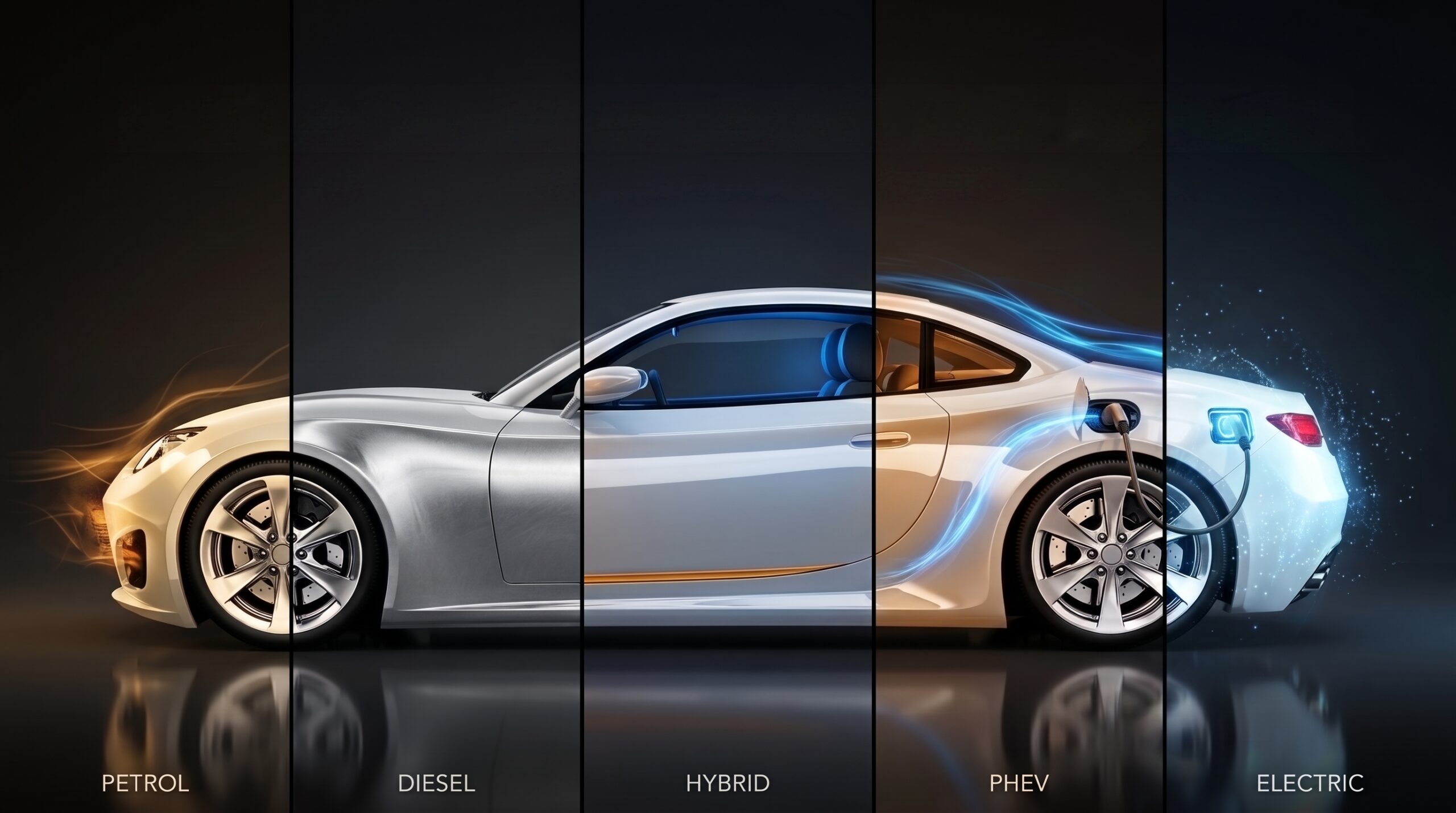
Writing a cheque for a luxury automobile in India in 2026 is no longer a simple choice between a smooth petrol engine and a torque‑heavy diesel. Your decision now sits at the intersection of NCR lifespan caps, upcoming fleet‑wide efficiency norms, GST 2.0 car slabs, and state‑level EV incentives—each of which directly shapes total cost of ownership (TCO), driving experience, and residual value over 5–10 years. For a ₹70 lakh executive sedan or a ₹3 crore flagship SUV, the real question is not just “Which engine feels best?” but “Which powertrain remains usable, tax‑efficient, and defensible as a long‑term asset in my city and segment?” This guide breaks down the four core luxury powertrains available in India—pure petrol, pure diesel, strong hybrid/PHEV, and full EV—and offers a consulting‑style framework to match the right propulsion to your actual usage profile.
1. The 2026 Context: Regulation, GST 2.0, and State Incentives
NCR lifespan caps and fuel denial
In Delhi‑NCR, diesel vehicles older than 10 years and petrol vehicles older than 15 years are classified as end‑of‑life and cannot legally operate, irrespective of RC validity. From late 2025, enforcement tightens further as fuel stations begin denying fuel to such vehicles, first in Delhi and select NCR districts from November 1, 2025, and then across the wider region from April 1, 2026. For a Delhi‑registered luxury car, this effectively caps usable life at 10 years for diesel and 15 years for petrol within NCR, after which relocation or scrappage becomes the only compliant options.
CAFE‑III: fleet‑wide efficiency and CO₂ targets
From April 1, 2027, India moves to the new Corporate Average Fuel Efficiency (CAFE‑III) regime for passenger vehicles, replacing the current standards. Draft norms indicate a fleet‑average curve tightening from about 94.76 g CO₂/km in FY 2027–28 to roughly 78.90 g CO₂/km by FY 2031–32. Electric vehicles and strong hybrids earn super‑credits and tradable CO₂ credits under these norms, nudging luxury OEMs to rebalance portfolios away from high‑emission pure ICE imports toward electrified products rather than imposing an outright displacement ban.
GST 2.0 and the EV tax advantage
Under GST 2.0, the passenger‑vehicle tax structure has been rationalised into three broad slabs. Electric vehicles attract 5% GST with no compensation cess, a concessional rate explicitly retained for both mass‑market and luxury EVs. Small and compact ICE cars up to 4 metres and within engine thresholds are taxed at 18% GST. Larger, high‑end ICE and strong hybrid cars and SUVs fall into a consolidated 40% GST slab, replacing the earlier combination of 28% GST plus up to 22% cess that once pushed effective tax above 43–50%.
On top of this, state‑level road tax and registration fees can add 13–20% to ex‑showroom prices in high‑tax states, while many EV policies offer partial or full waivers for EVs within defined price caps—such as full road‑tax and registration relief for EVs up to ₹30 lakh in some Delhi drafts, and significant EV rebates in Karnataka. In such incentive‑heavy states, a luxury EV can realistically enjoy a 25–35% lower effective tax burden than a comparable ICE or hybrid car once you combine the 5% GST rate with applicable road‑tax and registration waivers in the relevant price band.
2. Pure Petrol Luxury Cars: Refinement in an E20 World
Who it’s for
Pure petrol luxury cars in 2026 are best suited to low‑ to medium‑mileage urban owners, performance‑oriented buyers who prioritise engine note and throttle response, and enthusiasts with multi‑car garages where one vehicle is dedicated to weekend or out‑of‑city use.
Strengths and drive character
High‑displacement inline‑six and V8 petrol engines still deliver refinement, linear power delivery, and sound quality that synthetic sound systems struggle to replicate. Petrol powertrains also avoid high‑voltage traction battery packs and plug‑in hardware, reducing complexity around battery ageing and long‑term storage when cars sit for extended periods, provided routine maintenance is maintained. In Delhi‑NCR, petrol luxury cars retain a 15‑year usable life window, which is materially longer than diesel’s 10 years and matters for owners planning long horizons in that region.
Ownership trade‑offs
Fuel efficiency for heavy petrol luxury sedans and SUVs commonly sits in the 6–8 km/l range in dense metro traffic, with blended city‑plus‑highway figures often in the 8–12 km/l band for India‑spec cars. At Delhi petrol prices of roughly ₹102 per litre in July 2026, 6–8 km/l equates to about ₹13–₹17 per km in pure city scenarios, and even mixed usage typically stays in high single to low double digits per km. From April 1, 2026, nationwide E20 petrol (20% ethanol blend, minimum RON 95) introduces a further layer: most vehicles built from 2023 onward are engineered for E20, but older cars can see 3–7% efficiency loss and faster ageing of some components, making OEM‑confirmed compatibility essential for long‑term ownership. Overall, petrol remains the purist’s choice and a viable long‑term option in NCR, but for heavy, city‑dominated use its fuel‑cost profile—often ₹13–₹17/km—is structurally weaker than diesel, strong hybrids, or EVs.
3. Diesel Luxury Cars: Torque‑Rich, Policy‑Constrained
Who it’s for
Diesel still makes rational sense for owners who consistently drive more than 20,000 km per year, buyers of full‑size luxury SUVs who need effortless torque and long range per tank, and users registering vehicles outside Delhi‑NCR where the 10‑year cap is not yet applied in the same way.
Operational edge
Modern BS6 diesel luxury car engines deliver strong low‑end torque, allowing large SUVs to accelerate smoothly even when fully loaded and making them ideal for intercity cruising and mild off‑road use. Compact diesel SUVs routinely achieve 18–22 km/l on highways and 14–18 km/l in city driving; combined with 50–70 litre tanks, this yields 800–1,000 km per fill in favourable conditions, while heavier luxury SUVs still typically cover 600–900 km on one tank.
For mainstream compact luxury SUVs, per‑km energy costs can fall in the ₹4–₹6 range on highway‑heavy usage. For large luxury diesels, however, real‑world numbers are higher: city‑heavy usage commonly delivers around 8–11 km/l, which at Delhi diesel prices of roughly ₹95 per litre translates to approximately ₹9–₹12 per km in dense urban conditions, with mixed city‑plus‑highway usage typically averaging in the ₹7–₹10 per km band. In practice, that still undercuts petrol’s ₹13–₹17/km city profile but does not reach the ultra‑low 4–5 ₹/km often associated with very efficient compact diesels.
2026 diesel dilemmas
In Delhi‑NCR, diesel cars face a hard 10‑year operational ceiling, after which they become end‑of‑life vehicles that cannot be legally refuelled or driven locally, compressing the depreciation curve from around year six onward. BS6 diesels also rely on Diesel Particulate Filters and DEF (AdBlue) systems to meet emission norms, and frequent short, stop‑go city trips can prevent sufficient DPF regeneration, leading to warning lights and, if ignored, costly repairs. Owners are advised to incorporate periodic 20–30 minute highway runs or follow recommended regeneration procedures to maintain system health. Taken together, diesel remains the rational long‑distance choice outside NCR, especially in the SUV segment, but the 10‑year cap and DPF management requirements make it a more fragile long‑horizon asset for NCR‑centric ownership.
Also Read: Why Diesel Luxury Cars Still Make Sense
4. Strong Hybrids and Plug‑In Hybrids (PHEVs): The Flexibility Layer
Who they’re for
Strong hybrids luxury cars and PHEVs suit single‑car garages that must cover weekday commuting, family duties, and occasional highway trips; buyers who want EV‑like refinement and lower city consumption without fully committing to public charging networks; and corporate fleets seeking lower fuel bills and better compliance with emerging fleet norms while staying within familiar ICE‑based service ecosystems.
Architectures and real‑world performance
Strong hybrids use self‑charging systems via regenerative braking and engine‑driven charging, with modest batteries that support low‑speed EV running and assist the petrol engine under load. In the mainstream mid‑size segment (e.g., Grand Vitara/Hyryder), real‑world mixed‑usage efficiencies around 23–25 km/l are achievable, making running costs in the ₹4–₹5/km band at current petrol prices. In the luxury segment—for heavier MPVs and SUVs such as Vellfire or Lexus hybrids—a blended 16–20 km/l is a more realistic benchmark, translating to roughly ₹5–₹7/km in mixed conditions and ₹6–₹8/km in city‑heavy use. Plug‑in hybrids combine larger batteries (often 15–25 kWh) with full petrol drivetrains, delivering 40–80 km of pure EV range for daily city use and petrol‑backed range for longer trips, provided owners maintain regular home or office charging via AC wallboxes.autocarindia+2
Tax and TCO positioning
In the luxury segment, strong hybrids and PHEVs fall into the same 40% GST slab as larger ICE cars under GST 2.0, having transitioned from the earlier 28% plus 15% cess regime. Upfront pricing remains relatively high versus equivalent ICE cars, but lower city fuel consumption and strong used‑market demand can improve effective TCO over a 5–8 year period. As a result, strong hybrids and PHEVs are the “no‑drama” solution for buyers wanting meaningfully lower fuel costs than petrol (typically ~₹5–₹8/km for luxury hybrids vs ~₹13–₹17/km for comparable petrol), high refinement, and unrestricted highway usability without relying entirely on public charging.
5. Full Electric Luxury Vehicles (EVs): Tax‑Efficient Quiet Mobility
Who they’re for
Luxury EVs best fit chauffeured corporate leaders with predictable urban commutes, tech‑forward buyers and families with reliable parking and charging, and corporate or business fleets that can exploit higher depreciation rates and other tax advantages on EV assets.
Economic and experiential advantages
All pure EVs—including luxury models—benefit from a 5% GST rate with no cess, a concessional slab explicitly retained for both mass‑market and premium EVs. In states with strong EV policies, this is complemented by full or partial waivers on road tax and registration fees up to certain price caps, compressing the gap between ex‑showroom and on‑road prices. Typical EV efficiency in India (around 12–15 kWh/100 km), combined with standard residential tariffs, yields home‑charging costs in the ₹1–₹2 per km range, while public DC fast charging generally falls around ₹3–₹4 per km, both materially lower than petrol and often below diesel. EVs also deliver near‑silent cabins by eliminating engine noise and vibration, creating a distinct luxury experience compared to ICE.
For business use, accelerated depreciation rules allow EVs to be depreciated at around 40% in the first year versus roughly 15% for ordinary motor cars, significantly improving post‑tax economics for corporate buyers. Fast‑charging coverage along major corridors such as Delhi–Mumbai, Mumbai–Pune, and Bengaluru–Chennai continues to grow, although secondary routes still demand route planning and charger verification. Indian summer conditions, with heavy HVAC loads and active battery cooling, can reduce real‑world range by 10–20% versus temperate‑weather figures, but luxury EVs with realistic highway ranges in the 400–550 km band remain comfortable for most intercity use‑cases. For urban‑centric, well‑housed buyers and corporates, luxury EVs therefore offer the strongest combination of tax efficiency, per‑km cost advantage, and refinement, provided home or office charging can be reliably installed.
6. Powertrain Decision Matrix: Matching Profile to Propulsion
Summary matrix
| Parameter | Pure Petrol | Pure Diesel | Strong Hybrid / PHEV | Electric Vehicle (EV) |
| GST slab (luxury segment) | 40% for larger cars and SUVs | 40% for larger cars and SUVs | 40% for larger strong hybrids/PHEVs | 5% for all EVs, no cess |
| Typical running cost (₹/km) | ~₹13–₹17/km in dense city; ~₹9–₹13/km mixed | ~₹9–₹12/km city‑heavy; ~₹7–₹10/km mixed | ~₹6–₹8/km city‑heavy luxury; ~₹5–₹7/km mixed | ~₹1–₹2/km home; ~₹3–₹4/km DC fast |
| NCR operational lifespan | 15 years | 10 years | 15 years (petrol‑based) | Unrestricted by current lifespan caps |
| Range / interstate convenience | High with conventional refuelling | Very high (600–1000 km possible, depending on segment) | High (petrol backup) | Route‑dependent; strong on major corridors |
| Urban refinement (NVH) | High | Moderate (diesel clatter) | Very high | Exceptional (near‑silent) |
| Ideal annual mileage | <10,000 km | >20,000 km outside NCR | 10,000–20,000 km mixed | Any; strongest for daily urban use |
Persona‑based recommendations
Chauffeured corporate leaders with predictable urban commutes and reliable parking are best served by full EVs, which combine a 5% GST rate, potential road‑tax waivers, and very low per‑km energy costs with a quiet cabin experience that significantly enhances perceived luxury. Interstate highway cruisers who regularly travel between cities and accumulate high annual mileage outside NCR benefit most from diesel or long‑range PHEVs, which deliver long range, strong torque, and competitive running costs in mixed city‑plus‑highway scenarios, even if large luxury diesels realistically sit closer to ₹7–₹11/km than to compact‑SUV levels. Driving enthusiasts and collectors continue to gravitate toward high‑displacement petrol engines, possibly complemented by performance EVs, to maximise mechanical engagement and sound while treating running cost as a secondary concern. Single‑car garage owners needing one versatile vehicle for city commutes, family trips, and occasional highway journeys typically find strong hybrids the most balanced solution, with high city‑cycle efficiency, refined operation, and unrestricted interstate range without charging anxiety—and realistic running‑cost bands in the ₹6–₹8/km range for luxury hybrids vs ₹13–₹17/km for comparable petrol.
7. Practical Checklist Before You Book
Before choosing a powertrain, quantify your five‑year usage in terms of annual kilometres and city‑versus‑highway split, as high‑mileage highway usage points toward diesel or PHEVs while heavy city commuting favours EVs or strong hybrids. Map your regulatory exposure carefully if you are NCR‑centric, treating 10‑year diesel and 15‑year petrol caps as hard constraints and factoring in approaching fuel‑denial enforcement. Model effective on‑road tax for your state by comparing 40% GST versus 5% GST and overlaying state‑specific EV road‑tax and registration waivers in your price band. Finally, verify E20 compatibility for older petrol cars and ensure your residence or office can support at least a 7.4–11 kW AC wallbox for EVs and PHEVs, with sufficient public charging on your typical routes. Explore more luxury car insights and listings at Motozite.
Disclaimer: The figures, tax structures, regulatory details and running‑cost bands in this article are based on publicly available information and prevailing fuel/electricity prices as of mid‑2026. Actual costs will vary by city, driving style, vehicle specification and future policy changes. This guide is intended for general informational purposes only and does not constitute financial, tax, or legal advice. Buyers should confirm current fuel prices, GST rates, state road‑tax rules and OEM specifications with authorised dealers, local authorities and qualified advisors before making purchase decisions.
