
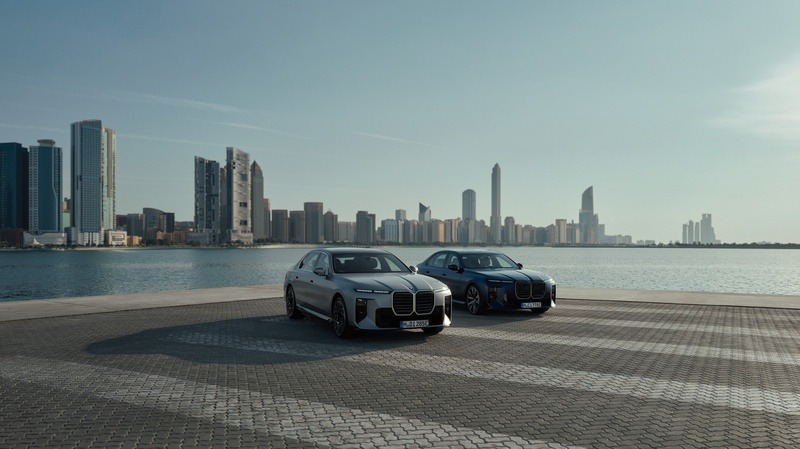
Most BMW, Mercedes-Benz, Audi, Volvo and Land Rover models sold in India are assembled here from imported kits, while Porsche, Lamborghini, Ferrari and Maserati cars are shipped in fully built. Local assembly has typically cut the showroom price by about 12 to 22 percent on the recent launches below. The latest example came on 27 October 2026, when the Defender 110 fell by up to Rs 34 lakh after JLR began assembling it in Pune. The catch is choice: locally assembled ranges are usually narrower, so the exact engine or body style you want may still be an import.
CKD vs CBU: what the two terms mean
A CBU (completely built-up unit) is a finished car that arrives on a ship. A CKD (completely knocked down) car arrives as a kit of parts and is put together in an Indian plant. Under Customs Notification 21/2011, a CKD kit cannot include a pre-assembled engine, gearbox or transmission. If it does, it can be treated as a more expensive semi-knocked-down import.
So “Made in India” on a luxury car usually means “assembled in India”. BMW says its Chennai-built cars have localisation of up to 50 percent. Mercedes, Audi and JLR use similar kit-based operations. Your new Audi Q5 was bolted together in Maharashtra, but a lot of what’s in it came from abroad.
Why local assembly changes the price so much
Import duty does the damage. According to Autocar India, a fully built car valued above USD 40,000 pays 110 percent, and one below that pays 70 percent. A January 2026 report on the trade deal put the duty on CKD kits at around 16 to 17 percent.
Take an imaginary car that lands in India at Rs 50 lakh. At 110 percent, duty adds Rs 55 lakh. At 16.5 percent, it adds about Rs 8 lakh. That’s a gap of roughly Rs 47 lakh before GST, dealer margin or anything else goes on top.
Real prices fall by much less than that sum suggests, as the table shows.
| Car | Imported price | Locally assembled price | Saving | Saving % |
| Defender 110 3.0 diesel or petrol (Oct 2026) | Rs 1.52 crore | Rs 1.18 crore | Rs 34 lakh | 22.4% |
| Range Rover 3.0 petrol Autobiography LWB (May 2024) | Rs 3.16 crore | Rs 2.60 crore | Rs 56 lakh | 17.7% |
| Range Rover Sport 3.0 Dynamic SE (Aug 2024) | Rs 1.69 crore | Rs 1.40 crore | Rs 29 lakh | 17.2% |
| Range Rover 3.0 diesel HSE LWB (May 2024) | Rs 2.80 crore | Rs 2.36 crore | Rs 44 lakh | 15.7% |
| Mercedes-Maybach GLS (Jan 2026) | Rs 3.17 crore | Rs 2.75 crore | Rs 42 lakh | 13.2% |
| Defender 110 2.0 turbo-petrol (Oct 2026) | Rs 1.13 crore | Rs 99 lakh | Rs 14 lakh | 12.4% |
All prices are ex-showroom, from Autocar India, Autocar Professional and MotorBeam, at the time of each change. Later price revisions are not included. Percentages are our calculation.
Why the gap between the sums and the showroom? Part of it is the cost of running a plant at relatively low volumes, and the carmaker decides how much of the saving to pass on. That’s our reading, because no brand publishes its pricing logic. The Defender also shows that a price cut isn’t the whole story: Autocar India says the 3.0-litre cars gained up to Rs 17 lakh of extra standard kit on top of the Rs 34 lakh drop.
Which luxury cars are assembled in India and which are imported
Line-ups change quickly, so treat this as a guide to November 2026 and confirm the specific variant with the dealer. The BMW, Audi and Lexus sides come from the brands’ own statements. Import lists are based on Autocar India’s January 2026 trade-deal analysis, which named those cars as built overseas, and later reports.
| Brand | Assembled in India | Still imported (examples) |
| BMW (Chennai) | 2 Series Gran Coupe, 3 Series LWB, M340i, 5 Series LWB, 7 Series, X1, X3, X5, X7, iX1 LWB, i5 LWB, i7 50 xDrive | i7 M70, M2, M4, M5, M8, XM, Z4 |
| Mercedes-Benz (Chakan) | C-Class, E-Class LWB, S-Class, Maybach S-Class S 580, GLA, GLC, GLE, GLS, Maybach GLS, EQS SUV | Maybach S 680, G-Class, CLE, SL, AMG GT, AMG C 63, AMG GLC, AMG GLE |
| Audi (Chhatrapati Sambhajinagar) | A4, A6, Q3, Q3 Sportback, Q5, Q7 | Q8, RS Q8, S5 Sportback |
| Land Rover (Pune) | Range Rover and Range Rover Sport (selected versions), Velar, Evoque, Discovery Sport, Defender 110 X-Dynamic HSE | Defender 90, Defender 130, Defender Octa, Defender V8, Discovery |
| Volvo (Hosakote) | XC60, XC90, EX30 | Check by model |
| Lexus | ES 350h | NX, RX |
| Porsche, Lamborghini, Ferrari, Maserati | None | Full range |
Two recent changes show how far this has moved. The Maybach GLS went local in January 2026, with India the first market outside the US to assemble it. And in September 2026 BMW began building the i7 50 xDrive in Chennai, with India only the second country after Germany to make the i7, according to BMWBlog. It costs Rs 1.95 crore, the same as the petrol 740 M Sport, while the imported i7 M70 costs Rs 2.65 crore. They aren’t the same car, but that Rs 70 lakh gap gives a feel for what the CBU route adds at the top end.
Audi isn’t slowing down either. Its India head told Autocar India that the new Q3, A5 and Q9 will all be assembled here, and that local production is “the core strategy” with or without a trade deal. The new Q3 went on sale in October 2026 at Rs 51.99 lakh, well below the Rs 55 lakh to Rs 60 lakh that Autocar India had expected.
Does locally assembled mean lower quality?
We see no reason to treat it that way. This is an opinion, and no published Indian data compares defect rates between CKD and CBU versions of the same car. A CKD car uses the manufacturer’s own kit, processes and warranty network, and BMW, Mercedes and Audi have been doing this for well over a decade.
The trade-off we’d watch is choice. Land Rover’s 2024 local Range Rovers were the 3.0-litre long-wheelbase cars. The V8s and short-wheelbase versions stayed imported. The new local Defender 110 comes only in X-Dynamic HSE trim. BMW’s local saloons are long-wheelbase versions. If you want a short-wheelbase car, a top engine or a rare trim, you will often be paying the import price.
Do trade deals change any of this?
Not much for the cars most people buy. The India-EU and India-UK agreements cut duty on fully built cars. They don’t change the story for CKD models. As Autocar India’s analysis put it, locally assembled cars are unaffected by the EU duty cuts.
- India-UK deal: in force from 15 July 2026, according to Auto India Daily. In-quota duty on big-engined UK cars falls from 110 percent to 30 percent in the first year, with smaller engines at 50 percent. Quotas are tight. In September, only 642 cars had been approved for seven companies. In May 2026, ahead of the deal, JLR cut the Range Rover SV by Rs 75 lakh and the Range Rover Sport SV Edition Two by Rs 40 lakh.
- India-EU deal: concluded in January 2026, but it still had to be ratified. An ORF analysis in March expected it to take effect in early 2027, and Autocar India expected price cuts only from 2027 or 2028. Duty on quota cars starts at 30 to 35 percent and falls towards 10 percent, with electric cars left out at first.
Slovakia-built Defenders were never going to benefit from the UK deal, which is part of why local assembly mattered so much for that model. Our explainer on whether FTAs will really make luxury cars cheaper in India goes deeper on the fine print.
What this means for pre-owned buyers
This is where local assembly matters most, and it’s the part most articles skip. When the new car’s price falls, the used imported version has lost its reference point overnight.
An owner who paid Rs 1.52 crore for a Defender 110 3.0 this year now competes with a new car at Rs 1.18 crore that has more equipment. So our advice is simple: price any used car against today’s new ex-showroom figure, not against the original invoice. Do that especially on Defenders, the Maybach GLS, and Range Rovers bought before 2024.
Sellers often quote what they paid. Our guide on how to negotiate the price of a pre-owned luxury car explains how to bring the conversation back to today’s numbers. If you own an imported model that hasn’t gone local yet, the same logic works against you: a CKD announcement could lower its value quickly, which is worth remembering if you plan to sell soon.
Our view: local or imported?
Buy the locally assembled version if it has the engine and body style you want. You’ll pay less, and on a luxury car that saving is real money, often enough to buy a whole second car.
Pay for an import only when there’s no local equivalent and that difference truly matters to you: a V8, a short-wheelbase Range Rover, an M or AMG performance model, or anything from Porsche. And if the car you want is imported but the brand already assembles close relatives here, ask the dealer directly whether local assembly is planned before you sign. Anyone who took delivery of a Defender 110 3.0 in September paid Rs 34 lakh more than today’s price, for less equipment.
You can compare new luxury cars and pre-owned luxury cars listed by sellers across India on Motozite.
FAQ: made-in-India luxury cars
Which luxury cars are made in India?
Most mainstream luxury models are assembled here from imported kits. They include the BMW 3 Series LWB, 5 Series LWB, X1, X5 and X7, the Mercedes C-Class, E-Class LWB, GLE and GLS, the Audi A6, Q5 and Q7, the Volvo XC60 and XC90, the Lexus ES 350h, and Range Rover, Velar, Evoque and selected Defender 110 models.
What is the difference between CKD and CBU cars?
A CBU, or completely built-up unit, is a finished car imported whole. A CKD, or completely knocked down, car comes as a kit and is assembled in an Indian plant. CKD kits pay around 16 to 17 percent duty, while CBU cars pay 70 or 110 percent, which is why local assembly lowers prices.
How much cheaper is a locally assembled luxury car in India?
Recent examples show savings of about 12 to 22 percent. The Defender 110 3.0 fell from Rs 1.52 crore to Rs 1.18 crore in October 2026, and the Mercedes-Maybach GLS fell from Rs 3.17 crore to Rs 2.75 crore in January 2026. These are ex-showroom prices at the time of the change.
Are Porsche cars assembled in India?
No. Porsche has no assembly in India, so its cars arrive fully built and pay the full import duty. The same is true of Lamborghini, Ferrari and Maserati. This is one reason a Macan or Cayenne can cost more than a BMW or Mercedes SUV of similar size.
Is the Land Rover Defender made in India now?
Partly. Since October 2026, the Defender 110 X-Dynamic HSE has been assembled in Pune from kits sent from Slovakia, with prices starting at Rs 99 lakh ex-showroom. The Defender 90, Defender 130, the Octa and the 5.0-litre V8 models remain fully imported.
Will trade deals make locally assembled luxury cars cheaper?
Probably not directly. The India-UK and India-EU deals cut duty on fully built imported cars within quotas, so CKD models see little change. Models such as the Audi Q5 or BMW X5 are unlikely to fall in price because of those agreements.
