
Ferrari delivered 13,640 cars in 2025, 112 fewer than the year before, and still grew its revenue by 7 percent to €7.15 billion. That one result sums up nearly 80 years of history. Ferrari began as a racing team, Scuderia Ferrari, founded by Enzo Ferrari in Modena in 1929. The first car to carry his name, the 125 S, followed in 1947. Ever since, Ferrari has treated racing as its reason to exist and road cars as something to keep in short supply. Fiat took control in 1969, Ferrari became independent again in 2016, and today it is a listed company that has just revealed its first electric car.
This is the story in order: the man, the racing, the near-sale to Ford, the cars that defined each era, and what it all means for Ferrari buyers in India, where the brand’s first Universo exhibition is running in New Delhi until 1 November.
Ferrari timeline at a glance
| Year | Milestone |
| 1898 | Enzo Ferrari born |
| 1929 | Scuderia Ferrari founded in Modena to race Alfa Romeos |
| 1939 | Enzo leaves Alfa Romeo and sets up Auto Avio Costruzioni |
| 1947 | 125 S, the first car to bear the Ferrari name, starts up on 12 March and wins the Rome Grand Prix in May |
| 1949 | First Le Mans 24 Hours win |
| 1951 | First Formula 1 win, at the British Grand Prix |
| 1962 | 250 GTO unveiled; only 39 are built |
| 1963 | Enzo walks away from a deal to sell to Ford |
| 1969 | Fiat buys 50 percent of Ferrari |
| 1987 | F40 launched for Ferrari’s 40th anniversary |
| 1988 | Enzo Ferrari dies on 14 August, aged 90 |
| 2000-2004 | Michael Schumacher wins five consecutive drivers’ titles |
| 2011 | Ferrari officially enters India |
| 2015-2016 | Stock market listing, then separation from Fiat Chrysler |
| 2022 | Purosangue, the first four-door Ferrari, revealed |
| 2023-2025 | Three consecutive Le Mans wins with the 499P |
| 2026 | Luce, Ferrari’s first electric car, unveiled |
Sources: Ferrari history pages and press releases, Fortune, Autocar India, Electrive.
1898 to 1939: Enzo Ferrari, the Alfa Romeo years and the Prancing Horse
Enzo Ferrari was born in 1898 and made his name in the 1920s as a racing driver working with Alfa Romeo. In 1923, after he won the Circuito del Savio, the mother of the First World War fighter pilot Francesco Baracca gave him the emblem her son had carried on his plane: a black prancing horse. It became the most famous badge in the car world.
Scuderia Ferrari itself was founded on 16 November 1929 in a notary’s office in Modena, according to Ferrari’s own history. It was not a carmaker. Its purpose was to buy Alfa Romeo racing cars and enter them in races, and both Alfa Romeo and Pirelli were among its partners. For most of the 1930s, the Scuderia was effectively Alfa Romeo’s racing department.
That arrangement ended in 1939, when Enzo left Alfa Romeo’s management. A clause in his contract stopped him building cars under his own name, so he set up Auto Avio Costruzioni instead, according to Ferrari. Its 815 raced in the Mille Miglia in April 1940, and then the Second World War stopped racing altogether.
1947: the first Ferrari, and an instant winner
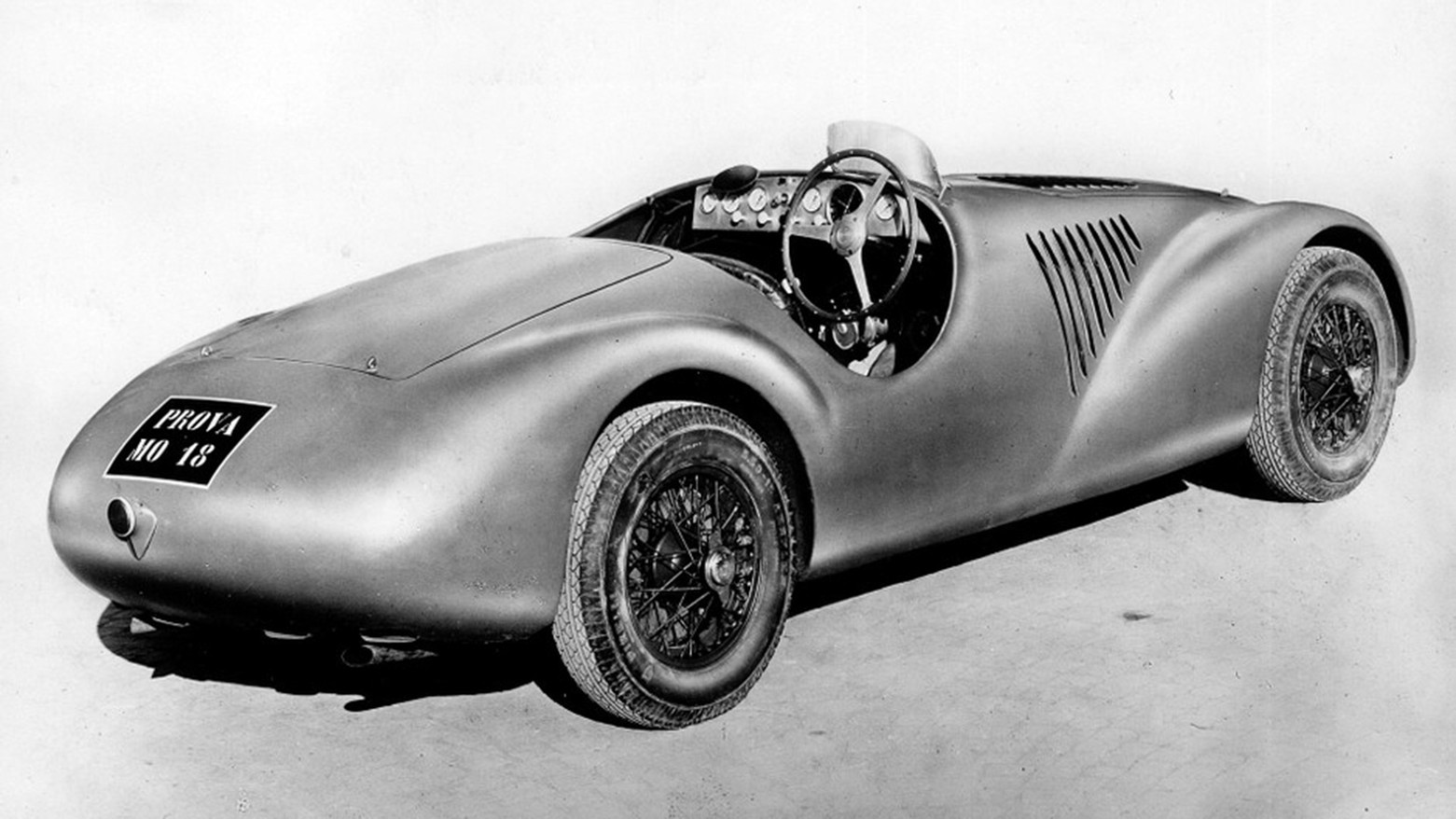
On 12 March 1947, Enzo Ferrari started the engine of the 125 S, the first car to bear his name, on the streets of Maranello. It was still an unbodied chassis at the time, according to Ferrari’s 70th anniversary release. Its small V12 set the pattern: a Ferrari would have a V12, and it would race.
The car made its debut at Piacenza on 11 May 1947, where Franco Cortese retired from the lead with a fuel pump problem. Later that month, Cortese drove it to victory in the Rome Grand Prix. The 125 S won six races that first year.
1949 to 1962: Le Mans, Formula 1 and the 250 GTO
Ferrari’s rise was fast. It won Le Mans for the first time in 1949, the first of 12 overall victories at the race. In Formula 1, José Froilán González gave Ferrari its first Grand Prix win at Silverstone on 14 July 1951, in a Ferrari 375. Ferrari’s own account says Enzo felt both joy and pain that day: joy at beating Alfa Romeo, and a sense of having turned on the company that made him.
The road cars of this era were built mostly for the people who raced them. The most famous is the 250 GTO, unveiled on 24 February 1962. “GTO” stood for Gran Turismo Omologata: it was a road-legal car built so Ferrari could race it in the GT class. Ferrari needed to build 100 for homologation. It built 39. That gap between what the rules asked for and what Ferrari chose to make is an early sign of the scarcity that defines the brand today.
1963 and 1969: the deal Enzo refused and the one he accepted
In 1963, Enzo Ferrari came close to selling his company to Ford. Negotiations ran through April and May, but he walked away just before signing. Ferrari’s own history says he did it to keep control of the racing division. The fallout fed one of motorsport’s best-known rivalries, between Ford and Ferrari at Le Mans.
Six years later, Enzo made a deal on his own terms. On 18 June 1969 he and Gianni Agnelli signed a contract in Turin under which Fiat bought 50 percent of Ferrari. Fiat brought money and industrial scale; Enzo kept running the racing team he cared about most.
Our view: these two decisions tell you everything about Enzo’s priorities. He would sell almost anything except control of the racing.
1987 and 1988: the F40 and the end of an era
For Ferrari’s 40th anniversary in 1987, the company launched the F40, a stripped-out, twin-turbo supercar with 478hp that Ferrari describes as the first road car to break 300km/h. It is often called Enzo’s last hurrah, and Ferrari says it was the last car he personally signed off.
Enzo Ferrari died on 14 August 1988, aged 90. A few weeks later, at the Italian Grand Prix at Monza, Gerhard Berger and Michele Alboreto finished first and second for Ferrari, after both McLarens dropped out.
1991 to 2008: Montezemolo, Schumacher and the dominant years
Luca di Montezemolo returned to Ferrari as president in November 1991, and the 1990s rebuilt both the road cars and the racing team. The payoff came in Formula 1. Michael Schumacher won five consecutive drivers’ titles from 2000 to 2004, and Ferrari won every constructors’ title from 1999 to 2004. In 2004, Schumacher and Rubens Barrichello won 15 of the 18 races between them.
Ferrari has won 16 constructors’ titles and 15 drivers’ titles in Formula 1, more than any other team. Its last drivers’ title came with Kimi Räikkönen in 2007, and its last constructors’ title in 2008.
2015 onwards: independence, scarcity and the Luce
Ferrari listed on the New York Stock Exchange in October 2015 under the ticker RACE, and fully separated from Fiat Chrysler in early January 2016, when its shares also began trading in Milan. As a standalone company, it doubled down on what had always worked: fewer cars, higher prices, longer waits.
The clearest example is the Purosangue, revealed on 13 September 2022 as Ferrari’s first four-door car, with a naturally aspirated 715hp V12. Ferrari’s CEO Benedetto Vigna asked people not to call it an SUV, and the company said Purosangue deliveries would not exceed 20 percent of its total sales over the model’s life. Most carmakers would build as many SUVs as they could sell. Ferrari capped its own.
The results speak for themselves. In 2025 Ferrari reported net revenues of €7.15 billion and net profit of €1.6 billion on 13,640 cars, according to its annual results. On track, the 499P won Le Mans three years running, from 2023 to 2025. And in May 2026 Ferrari fully revealed the Luce, its first electric car: a four-door, five-seater with four motors, 772kW, a 122kWh battery and a starting price of €550,000, designed with LoveFrom, the studio founded by Jony Ive and Marc Newson.
Ferrari in India
Ferrari entered India officially in May 2011, opening its first dealership in Delhi with the Shreyans Group as importer, according to Autocar India. Before that, Indian Ferrari owners had to rely on unauthorised service. The launch line-up ran from the California at Rs 2.22 crore to the 599 GTB Fiorano at Rs 3.57 crore.
Fifteen years later, Indian Ferrari prices are in the middle of a big change. Business Today reported in May 2026 that Ferrari dealers were taking orders at prices linked to the India-EU free trade agreement, which is expected to cut import duty on cars from 110 percent to 30 percent in its first year once it takes effect. The agreement is expected to be ratified around the end of 2026 or early 2027. Autocar India’s Ferrari listing reflects those new prices:
| Model | Ex-showroom (Delhi), as listed |
| Amalfi | Rs 4.08 crore |
| Amalfi Spider | Rs 4.60 crore |
| 296 GTB | Rs 5.40 crore |
| 12Cilindri | Rs 5.89 crore (coupe) to Rs 6.38 crore (Spider) |
| Purosangue | Rs 7.59 crore |
| 849 Testarossa | Rs 10.37 crore |
Source: Autocar India Ferrari price listing, updated 28 September 2026. The Purosangue was previously Rs 10.5 crore, and Autocar India says deliveries at the lower price depend on the trade agreement taking effect, expected in 2027 or 2028. Confirm the price, delivery date and any conditions in writing with the dealer.
And right now, Ferrari is putting its whole history on show in India. Universo Ferrari, the brand’s travelling exhibition, has come to Yashobhoomi in Dwarka, New Delhi, until 1 November 2026, its first India edition. According to Autocar India, it marks the India debuts of the F80 hypercar, the Luce EV and the 12Cilindri Manuale, alongside the 499P Le Mans car. Our Ferrari Universo exhibition guide has the details.
What Ferrari’s history means if you’re buying one in India
- Scarcity protects values, mostly. Ferrari limits supply on purpose, which is why its cars generally hold value well. But in our view, the trade-agreement price cuts are a real risk for anyone selling a recent Ferrari in India over the next two years. If a new Purosangue drops by close to Rs 3 crore, used prices are likely to follow. Factor that in before paying a premium for a nearly new car.
- Check the service history with an authorised dealer. Since 2011 there has been an official network; a car serviced outside it, especially one imported before then, needs a much closer look.
- For older, collectable Ferraris, ask about Ferrari Classiche. Ferrari set up its Classiche department in 2006 to restore and certify historic cars. Certification is the strongest proof that a classic is what the seller says it is.
You can browse pre-owned Ferraris listed on Motozite and compare them with other ultra-luxury cars above Rs 2 crore. For the rivalry that started with a tractor maker’s grudge, read our history of Lamborghini.
FAQ
Who founded Ferrari and when?
Enzo Ferrari founded Scuderia Ferrari in Modena, Italy, on 16 November 1929, as a racing team that entered Alfa Romeo cars. The first car to carry the Ferrari name, the 125 S, was started for the first time in Maranello on 12 March 1947.
What was the first Ferrari car?
The first car to bear the Ferrari name was the 125 S of 1947, powered by a V12. It made its race debut at Piacenza in May 1947 and won the Rome Grand Prix later that month, with Franco Cortese driving. It won six races in its first year.
What does the Ferrari logo mean?
The prancing horse belonged to Francesco Baracca, an Italian First World War fighter pilot who painted it on his plane. After Enzo Ferrari won the Circuito del Savio in 1923, Baracca’s mother gave him the emblem. Ferrari has used it ever since.
Who owns Ferrari now?
Ferrari is an independent, publicly listed company, trading under the ticker RACE on the New York Stock Exchange and in Milan. Fiat bought 50 percent of Ferrari in 1969, and Ferrari separated from Fiat Chrysler in January 2016.
How many Formula 1 titles has Ferrari won?
Ferrari has won 16 Formula 1 constructors’ championships and 15 drivers’ championships, the most of any team. Its last drivers’ title was Kimi Räikkönen’s in 2007, and its last constructors’ title came in 2008.
When did Ferrari come to India, and what is the cheapest Ferrari in India?
Ferrari officially entered India in May 2011, with its first dealership in Delhi. As of October 2026, the Ferrari Amalfi is the most affordable model in India at Rs 4.08 crore ex-showroom, according to Autocar India’s listing, which reflects prices linked to the India-EU trade agreement.
