
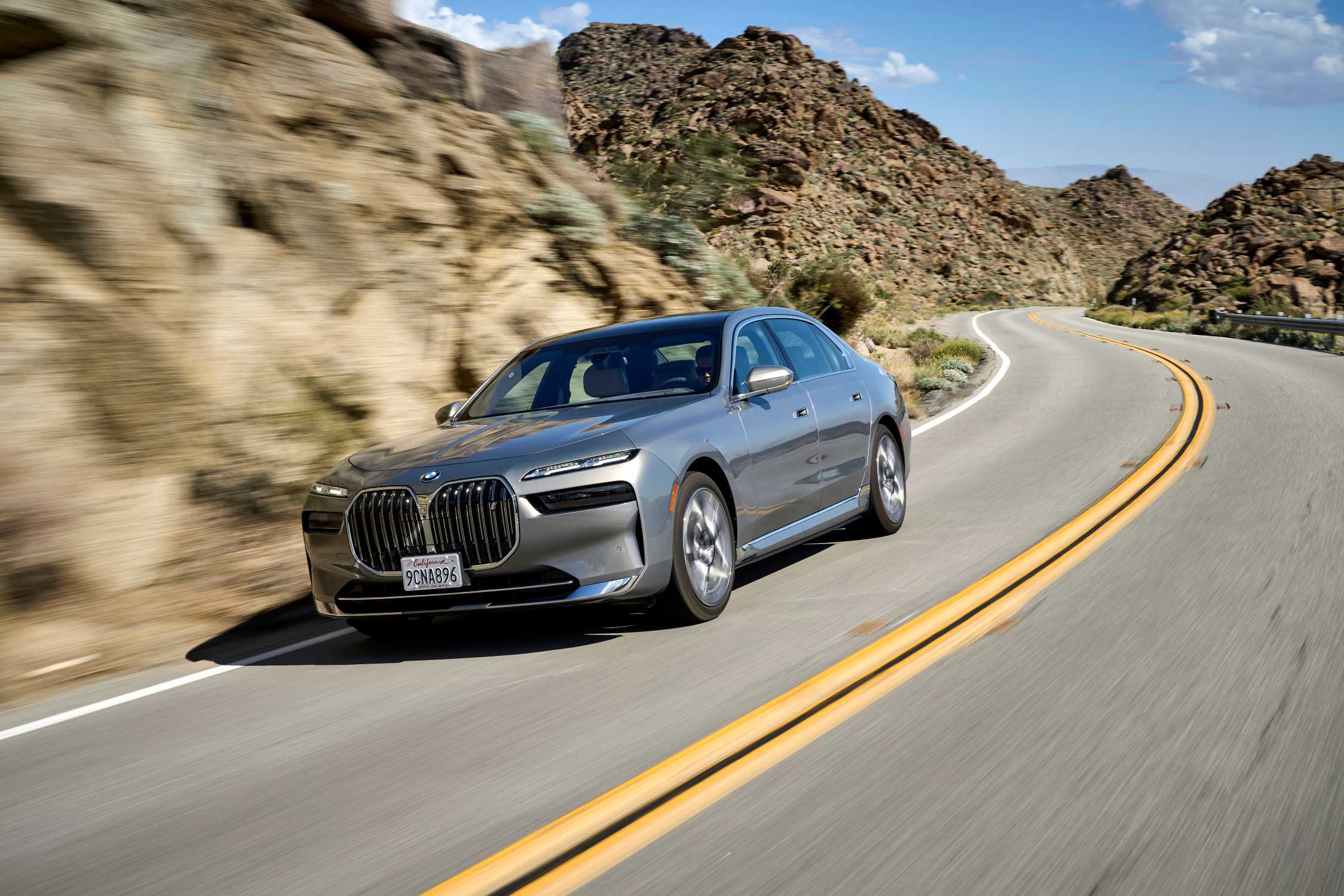
On a used luxury EV, the high-voltage battery decides the deal. Before you pay, get two things in writing from an authorised dealer: a battery health read-out for that VIN, and the exact date and kilometre limit on which its battery warranty ends. Most luxury EVs sold in India carry an 8-year battery warranty (the Mercedes EQE SUV was launched with 10 years), counted from the car’s first sale, not from your purchase. The warranty generally stays with the car when it changes hands, but only after the RC is in your name and the dealer has your details on record. And read the capacity clause: some battery warranties cover defects, not gradual loss of range.
Why the battery matters more than the odometer
Luxury EVs lose value quickly in India, which is exactly why a used one can be a smart buy. On 28 October 2026, Motozite’s pre-owned EV listings showed twelve cars, and the gap between launch prices and today’s asking prices is wide:
| Car | Registered | Km | Asking price | Launch price (ex-showroom) |
| Mercedes-Benz EQE 500 4Matic SUV | 2023 | 26,106 | Rs 79.75 lakh | Rs 1.39 crore (Sept 2023) |
| BMW iX xDrive40 | 2024 | 25,000 | Rs 77.90 lakh | Rs 1.16 crore (Dec 2021) |
| Volvo XC40 Recharge E80 Ultimate | 2023 | 38,236 | Rs 38 lakh | Rs 55.90 lakh (July 2022) |
| BMW i7 eDrive50 | 2024 | 3,000 | Rs 1.57 crore | Not compared |
Asking prices exclude other charges and are what sellers want, not what cars sell for. Launch prices are the first price announced in India; the car you are looking at may have cost more new.
A two-year-old EQE SUV asking about 43 percent below its launch price is a big saving. The catch is that a buyer is paying for a battery pack that is the single most expensive part of the car and that nobody can fully inspect by looking at it. Autocar India put it plainly in July 2026: battery health is the biggest factor in an EV’s resale value, and you should buy a car that is still inside its battery warranty and confirm that the warranty transfers to you.
We’d go a step further. On a luxury EV, the remaining battery warranty is worth more than a low odometer reading. A 2023 car with 30,000km and seven years of battery cover left is a safer purchase than a 2021 car with 12,000km and five.
Battery warranties on luxury EVs in India
These are the terms announced by each brand at the Indian launch of the model listed. Terms can change between model years, so treat the table as a starting point and confirm against the warranty booklet for the specific car.
| Brand and model | Battery warranty announced in India | Source |
| BMW iX1, i7 | 8 years or 1,60,000km | BMW Group India press releases (2023) |
| Audi e-tron, Q8 e-tron | 8 years or 1,60,000km | Autocar India (2021), Audi India (2023) |
| Mercedes-Benz EQC | 8 years or 1,60,000km | Business Today (2020 launch) |
| Mercedes-Benz EQE 500 4Matic SUV | 10 years (no km limit stated in launch reports) | Autocar Professional, evo India, Car India (Sept 2023) |
| Volvo XC40 Recharge | 8 years (no km limit stated) | Volvo Car India (July 2022) |
| Jaguar I-Pace | 8 years or 1,60,000km | Autocar Professional (March 2021) |
Two points from this table catch buyers out.
The clock started at the first sale. An iX registered in January 2024 has battery cover until about January 2032 or 1,60,000km, whichever comes first. If the first owner drove 40,000km a year, the kilometre limit may arrive long before the date.
Mercedes changed its terms. The EQC launched with 8 years in 2020, and the EQE SUV came with 10 years in 2023. Two used Mercedes EVs of similar age can carry very different cover. Ask a Mercedes-Benz dealer to read the terms off the VIN rather than assuming.
Read the fine print: defect cover is not range cover
This is the part most used-EV guides skip.
A battery warranty can promise one of two things. It can cover a defect, meaning the pack or a module fails. Or it can also guarantee capacity, meaning the pack will hold at least a stated share of its original energy for a set period. A warranty that only covers defects will not help you if the battery has simply faded and the car now goes 15 percent less far on a charge.
The brands word this differently, and the Indian launch announcements rarely say which kind you are getting. As an illustration of how much it varies, BMW’s published high-voltage battery warranty terms for Thailand cover technical defects and exclude State of Health capacity loss. Porsche’s published terms for Malaysia, on the other hand, guarantee that a Taycan’s battery keeps at least 80 percent of its net capacity for 3 years or 60,000km, and at least 70 percent until the end of the 8-year warranty. Neither document is an Indian one, and the Indian terms may differ. That is the point: ask the dealer to show you the capacity clause in the Indian warranty booklet for that car, in writing, before you agree a price.
Also check what voids the cover. BMW’s published terms list accident damage, unapproved parts or software, opening the battery, and skipping manufacturer inspections as reasons a claim can be refused. Lexus’s hybrid battery cover in India is void if the car leaves the authorised service network. Expect similar conditions on most brands, which makes a full authorised-workshop service history the most valuable document a seller can hand you.
How to check the battery health of a used luxury EV
There is no standard battery health test in India yet. An EVreporter analysis in June 2025 noted that most quick tools look at a single charge cycle and can mislead, and that manufacturers each interpret State of Health (SoH) their own way. So use several checks, and trust the dealer’s data most.
1. Get the dealer’s diagnostic read-out. Ask an authorised workshop of that brand to run a full scan of the car, including the high-voltage battery, and to give you the result on paper with the VIN printed on it. Some brands will show a health percentage; others will only confirm there are no battery faults or stored warnings. Either is useful. A seller who refuses to let the car go for a dealer check is telling you something.
2. Read the service history line by line. Look for the high-voltage battery checks at each scheduled service, any software updates, and any battery or charging-related repairs. Stamps alone are not enough. Ask for the invoices, and have the dealer confirm them against its own records.
3. Run a simple energy test on the drive. Note the battery percentage before and after a longer test drive, along with the energy used from the trip computer. Divide the energy used by the percentage drop. If the car used 30kWh while the battery fell from 90 to 45 percent, it is holding about 66.7kWh usable (30 divided by 0.45). Compare that with the usable capacity in the brochure for that model. This is rough, because battery management software keeps buffers and the gauge is not perfectly linear, but a big shortfall is worth asking about. Our rule of thumb: a gap of more than 10 to 15 percent on a car under four years old needs an explanation from the dealer.
4. Do not trust the range shown on the dashboard. The predicted range at 100 percent is based on recent driving. A car driven gently in the city by its last owner will show a flattering figure. One driven hard on the expressway will look worse than it is.
5. Check the underbody. The battery sits under the floor. Look for dents, scrapes and repaired mounting points, and check whether the car has spent its life in a city prone to flooding. Team-BHP’s used-EV guide flags moisture inside the battery pack as a concern in coastal Indian cities. If the car has ever had water above the floor, walk away unless the brand has inspected and cleared the pack in writing.
6. Plug it in. Charge it on an AC wallbox and, if you can, at a DC fast charger during the inspection. The car should start charging without errors and the charging power should look reasonable for the conditions. Charging speed varies with temperature and charge level, so this is a test for faults, not a health score.
How to transfer the battery warranty to your name
The good news is that factory warranties in India are generally tied to the car, not the owner. Volvo India’s warranty page says repairs under warranty apply regardless of any change of ownership during the warranty period. BMW’s published terms say later owners get the same benefits. Lexus India says unexpired warranty can be transferred to subsequent owners within India. In practice, a few steps make the difference between cover that exists on paper and cover a dealer will honour.
- Transfer the RC first. Under the Central Motor Vehicles Rules, the seller reports the sale in Form 29 and the buyer applies for transfer in Form 30, within 14 days if the car stays in the same state and 45 days if it was registered in another state, according to the mParivahan portal. Inter-state cars also need an NOC from the original RTO.
- Visit an authorised dealer with the new RC. Ask them to update the owner details against the VIN in the brand’s system. This is what lets you book warranty work in your own name later.
- Get the remaining cover in writing. You want the battery warranty end date, the kilometre limit and the current odometer reading on one dealer-stamped document. Ask the same question about any extended vehicle warranty or service package the first owner bought, because those may have different transfer rules from the factory battery warranty.
- Move the insurance and check the battery add-on. Transfer the policy into your name and check whether it includes a battery-protection add-on. Our guide to luxury EV insurance and battery cover explains which add-ons are worth paying for.
- Ask about the charger and cables. The wallbox usually stays at the first owner’s home. Confirm what comes with the car, including the portable charging cable, and see our home EV charger guide if you need to install one.
Models that need extra thought
Some luxury EVs are no longer in production, and that changes the long-term picture even when the battery warranty is still running.
- Audi Q8 e-tron. Audi’s Brussels plant built its last Q8 e-tron on 25 February 2025 and closed that month. The battery warranty still runs its course, but how parts supply will hold up over the next decade is a fair question to put to an Audi dealer before you buy.
- Jaguar I-Pace. Production was due to end in December 2024 as Jaguar prepared its move to a new range of EVs. Jaguar said it would continue to service its outgoing models.
Neither is a reason to avoid these cars outright, and both can be excellent value. They are a reason to want more warranty left, a full dealer history and a clear answer on parts availability before you commit.
Our view: what makes a good used luxury EV buy
- The sweet spot is two to three years old, with at least five years of battery warranty left, a complete authorised-workshop history and no accident or flood record.
- Prefer brands still selling EVs in India, so parts, software updates and trained technicians stay easy to find.
- Price the remaining warranty. If two similar cars are Rs 3 lakh apart but one has three more years of battery cover, the dearer one may be the better buy.
- Do not skip the dealer check to save time. A battery read-out costs a fraction of what a pack costs to replace.
You can browse pre-owned electric luxury cars and demo EVs listed by sellers across India on Motozite. Before the test drive, our luxury car test drive checklist covers everything that isn’t the battery, and our guide on how to negotiate the price of a pre-owned luxury car shows how to use the battery report at the table.
FAQs
How do I check the battery health of a used electric car in India?
Ask an authorised dealer of that brand to scan the car, including the high-voltage battery, and give you a printed report against the VIN. Back it up with the service history, an energy test on a longer drive and an underbody check for damage or flooding. Do not rely on the range shown on the dashboard, because it is based on the last owner’s driving.
Does the EV battery warranty transfer to the second owner in India?
In most cases, yes. Factory warranties are tied to the car, and brands such as Volvo, BMW and Lexus say cover continues after a change of ownership. Transfer the RC first, then have an authorised dealer update the owner details against the VIN and confirm the remaining battery cover in writing.
How long is the battery warranty on luxury EVs in India?
Most carry 8 years or 1,60,000km, including BMW, Audi, the Mercedes EQC and the Jaguar I-Pace, according to their Indian launch announcements. Mercedes-Benz launched the EQE SUV in 2023 with a 10-year battery warranty. The period counts from the car’s first sale, not from when you buy it.
What battery health percentage is acceptable on a used EV?
There is no single Indian standard. Where brands publish a capacity guarantee, it is typically around 70 percent of original capacity by the end of the warranty, as in Porsche’s published terms for some markets. A two- to four-year-old car should normally be well above that. Some warranties only cover defects, not capacity loss, so check which kind applies to the car you are buying.
Is buying a used luxury EV a good idea in India?
It can be very good value, because luxury EVs depreciate quickly. On 28 October 2026, a 2023 Mercedes EQE 500 SUV listed on Motozite was asking about 43 percent below its launch price. The risk sits in the battery, so buy a car with years of battery warranty left, a full authorised service history and a clean dealer battery report.
What documents do I need to transfer a used EV to my name?
The seller files Form 29 and the buyer files Form 30 with the RTO, within 14 days for a same-state car or 45 days for an inter-state one, along with the RC, insurance and any state-specific documents. An inter-state car also needs an NOC. Then take the new RC to an authorised dealer to update the warranty records.
