
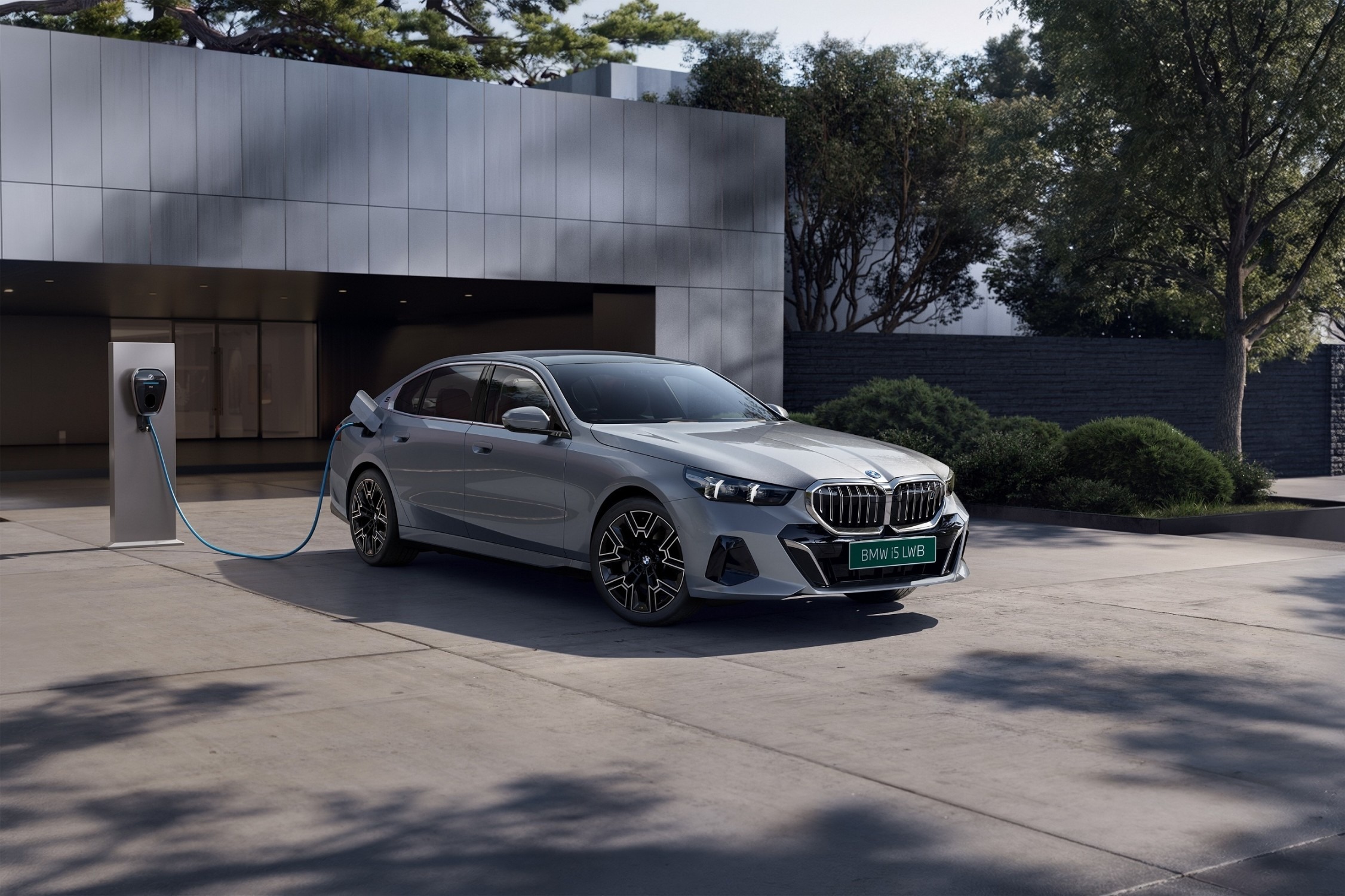
Insuring a luxury electric car in India costs you slightly less on the mandatory third-party side than an equivalent petrol or diesel car, but the own-damage cover is where the real risk sits, and most of that risk is the battery. If you buy one add-on beyond zero depreciation, make it battery protection. A standard comprehensive policy generally pays for accident damage to the pack, but water ingress and electrical short circuits are where claims get messy, and those are exactly the events a dedicated battery add-on is written for.
That is the short answer. The rest of this guide explains how EV premiums are actually worked out in India, why depreciation hits batteries harder than you might expect, and which add-ons are worth paying for on a car in the ₹55 lakh to ₹2 crore bracket.
How third-party premium works for electric cars in India
Third-party (TP) cover is compulsory, and its price is fixed by regulation, not by the insurer. For electric cars, the slab is decided by motor power in kilowatts rather than engine displacement, and the rates already build in a discount of about 15% over equivalent petrol and diesel vehicles.
| Motor power (private electric car) | Annual TP premium (renewal) | 3-year TP premium (new car) |
| Up to 30 kW | ₹1,780 | ₹5,543 |
| Above 30 kW, up to 65 kW | ₹2,904 | ₹9,044 |
| Above 65 kW | ₹6,712 | ₹20,907 |
Base premiums before 18% GST. These are the rates notified from 1 June 2022.
Here is the detail most buyers miss: practically every luxury EV on sale in India lands in the top slab. The Mercedes-Benz CLA electric, now the most affordable Mercedes EV in India, makes 224 hp (about 165 kW) in its 200 version. The BMW i5 Long Wheelbase makes 268 hp, roughly 200 kW. Both are comfortably past 65 kW, so the ₹20,907 three-year figure is the one that applies on day one.
For comparison, a petrol or diesel private car above 1,500cc pays ₹7,897 a year or ₹24,596 for three years. So an EV owner saves around ₹1,200 a year on TP. Useful, but not a reason to buy the car.
One caveat on these numbers. A revision of TP rates has been under discussion since 2025, but at the time of writing we have not found a notified change, so the 2022 rates are still the ones insurers quote. Check the figure on your policy schedule rather than assuming.
Own-damage premium: where the money goes on a luxury EV
Own-damage (OD) cover is priced by the insurer and is driven mainly by the Insured Declared Value (IDV), the city you register in, and the add-ons you pick. IDV starts from the ex-showroom price and drops on a fixed depreciation schedule as the car ages.
| Age of car | Depreciation applied to IDV |
| Up to 6 months | 5% |
| 6 months to 1 year | 15% |
| 1 to 2 years | 20% |
| 2 to 3 years | 30% |
| 3 to 4 years | 40% |
| 4 to 5 years | 50% |
| Over 5 years | Agreed between owner and insurer |
Run that against a real car. The BMW i5 LWB is priced at ₹79.60 lakh ex-showroom. Between its second and third birthday, the schedule takes 30% off, leaving an IDV of about ₹55.7 lakh. That is a gap of roughly ₹24 lakh against the ex-showroom price alone, before you count road tax and registration. If the car is stolen or written off in that window, a plain policy pays the IDV, and you absorb the rest.
On a petrol car, a total loss usually means a serious crash. On an EV, insurers have warned that battery damage even in a minor accident can push a claim towards a constructive total loss, because replacing the pack costs a large share of the car’s value. An insurer quoted by Business Today put the battery at around 50 to 60% of an electric car’s cost. That ratio was said about EVs in general and will be lower on a ₹1 crore car with an expensive interior and chassis, but the principle holds: the battery is the most expensive single component you own.
Why the battery changes the depreciation maths
When a part is replaced under a normal claim, the insurer deducts depreciation on that part. Batteries sit in the 50% bucket. Insurers told Business Today that applying 50% depreciation to the battery component is the norm, and that they cannot depart from the regulator’s schedule.
Think about what that means in practice. If a covered incident wrecks the pack and the insurer agrees to replace it, a policy without zero depreciation leaves you paying half the battery cost. On a luxury EV, that bill can run into several lakhs.
This is why zero depreciation is not optional on an electric car. On a petrol car, it saves you the plastic bumpers and rubber seals. On an EV, it protects you from a deduction on the single biggest line in the repair estimate.
Battery cover vs battery warranty: they do different jobs
A lot of buyers assume the manufacturer’s battery warranty makes battery insurance redundant. It does not.
Mercedes-Benz India offers 8 years or 1,60,000 km on the CLA electric’s battery, and BMW offers the same 8 years or 1,60,000 km on the i5 LWB. Those warranties cover manufacturing defects and abnormal capacity loss. They do not pay for a pack that was punctured by a road hazard, shorted by water, or damaged in a collision. That is insurance territory.
The overlap actually runs the other way. Insurers write their EV add-ons to exclude anything covered by a warranty or a recall. IFFCO Tokio’s charger and charging accessories add-on, for instance, excludes claims that fall under other insurance, a warranty or a recall campaign, along with manufacturing defects. So the two products sit side by side. Neither replaces the other.
The EV add-ons worth paying for
1. Battery protection
What it covers varies by insurer, so read the wording, but the core is damage to the battery from water ingress and electrical faults such as a short circuit or power surge. Zuno General Insurance’s EV add-on, for example, covers loss from fire, self-ignition or short circuit while the car is charging or parked at a charging station, and consequential battery loss from water ingress caused by an insured peril.
Who needs it: anyone registering in Mumbai, Chennai, Kolkata, Gurugram or Bengaluru, where a single monsoon evening can leave underpasses flooded. Frankly, it is hard to argue against it anywhere. If you are buying a luxury EV and the insurer offers this, take it.
2. Zero depreciation
Covered above, and the most important cover after battery protection. Insurers put age limits on zero dep, and it earns its keep mostly in the first three to five years. That lines up with the warranty period, which is also when the car is worth the most.
3. Return to invoice
Return to invoice (RTI) pays the original invoice value instead of the depreciated IDV after a total loss or theft. Given the ₹24 lakh gap we worked out on the i5 LWB by year three, this is cheap peace of mind for a new car. It matters less on a pre-owned EV whose invoice value has already been reset by the market.
4. Charger and charging equipment cover
Worth it if you have a wallbox installed at home. Policies of this kind typically cover the wallbox, portable charger, charging gun, cable and the dedicated electrical panel against accidental damage, water ingress, short circuit and power surges. The conditions are strict, though. IFFCO Tokio’s version, for example, requires the panel to be installed specifically for the insured car as the manufacturer recommends, excludes non-OEM accessories and charging that does not follow OEM guidelines, and counts any claim against your No Claim Bonus. If you charge on a third-party wallbox bought online, ask the insurer in writing whether the cover still applies.
5. EV-capable roadside assistance
A dead EV cannot be refuelled from a can. It needs to be moved to a charger, and many EVs should not be towed with the driven wheels on the road. Make sure the RSA explicitly includes flatbed recovery. This sounds like a footnote until it is 11 pm on the Mumbai-Pune Expressway.
What you can skip
Engine protection, in its petrol-car form, makes little sense on an EV, and many insurers do not offer it for electric cars. Where it is offered, some versions are reworded to cover electrical system and motor damage, which overlaps with battery cover. Do not pay twice for the same peril. Consumables cover is worth less on an EV than on an ICE car, since there is no engine oil or filter to replace after a repair.
Buying a pre-owned luxury EV? Check these four things
Pre-owned luxury EVs are getting easier to find, and the insurance questions are slightly different.
- Transfer the policy to your name. Under Section 157 of the Motor Vehicles Act, the insurance is deemed to transfer with the car, and the new owner has to apply to the insurer to update the certificate within 14 days of purchase. Get it done alongside the RTO transfer.
- Your NCB does not come with the car. No Claim Bonus belongs to the previous owner. Budget for the full OD premium in your first year unless you have your own NCB to carry over.
- Ask whether the current policy has battery cover. If it does not, add it at renewal. Some insurers restrict add-ons on older cars, so it is easier to keep cover continuous than to buy it later.
- Check the remaining battery warranty. Mileage and age both count. A three-year-old EV with 90,000 km on it still has years of warranty left on an 8-year/1,60,000 km plan, but a high-mileage fleet car may not.
You can browse pre-owned electric luxury cars on Motozite and confirm these details with the seller before you commit.
The bottom line
For a luxury EV, the third-party premium is fixed and slightly cheaper than an equivalent ICE car, so there is nothing to negotiate there. The decisions that matter are on the own-damage side. Our recommended stack for a new car: comprehensive cover, zero depreciation, battery protection, return to invoice, and flatbed-capable RSA, with charger cover if you have a home wallbox. Compare that against the general insurance add-ons guide for luxury cars and you will notice the difference: on an EV, the battery decides almost everything.
If you are still choosing the car itself, the new electric luxury cars on Motozite page lists current models, and the on-road price calculator shows how insurance fits into the total cost.
FAQs
Is insurance cheaper for electric cars than petrol cars in India?
Third-party premium is cheaper. EV rates are set by motor power and include a discount of about 15%; a private EV above 65 kW pays ₹6,712 a year against ₹7,897 for a petrol or diesel car above 1,500cc, both before 18% GST. Own-damage premium depends on IDV and add-ons, so a high-value EV can still cost more to insure overall.
Which third-party slab does a luxury electric car fall into?
Almost always the above-65 kW slab. The Mercedes-Benz CLA electric makes about 165 kW in its entry version and the BMW i5 LWB about 200 kW. That means ₹20,907 (plus GST) for three years of TP cover on a new car and ₹6,712 a year on renewal, at the 2022 notified rates.
Does a comprehensive policy cover EV battery damage?
A comprehensive policy generally covers accident damage to the battery. Damage from water ingress, short circuits and power surges is where a dedicated battery protection add-on applies. Policy wordings differ, so check the exclusions before you buy.
Is EV battery protection the same as the manufacturer’s battery warranty?
No. The warranty, typically 8 years or 1,60,000 km on luxury EVs such as the Mercedes CLA electric and BMW i5 LWB, covers manufacturing defects and abnormal degradation. Battery protection insurance covers damage from insured events such as flooding or short circuits. Insurers exclude claims that are covered by a warranty or recall.
Do I need zero depreciation on an electric car?
Yes. In a normal claim, insurers typically apply 50% depreciation to the battery component, so without zero depreciation you could pay half the replacement cost of the most expensive part of the car. Insurers apply age limits, and the cover is most useful in the first three to five years.
Does home charger damage get covered by car insurance?
Only with a charger cover add-on. These typically cover the wallbox, cables, charging gun and dedicated electrical panel against accidental damage, short circuit and surges, but often exclude non-OEM equipment and charging that does not follow the manufacturer’s guidelines.
