
A pre-owned BMW in India typically costs 40-60% less than the same car did new, which is why the segment is crowded with 3 Series, 5 Series, and X1 listings between Rs 12 lakh and Rs 40 lakh. But “BMW” covers three very different ownership experiences depending on generation: pre-2014 diesels with a known timing chain weakness, 2015-2019 cars that are the sweet spot for most buyers, and post-2020 cars that still carry new-car-adjacent running costs. Here is what actually shows up in the Indian used market, what each generation costs to buy and run, and which one suits which buyer.
Which BMW models dominate India’s used-car market
The 3 Series and 5 Series sedans, plus the X1 compact SUV, make up the bulk of pre-owned BMW listings on marketplaces like CarDekho and CarWale, with the X3 and X5 growing in smaller numbers. That mirrors what BMW sold new in India: the 3 and 5 Series were the volume sedans through the 2010s, the X1 became BMW India’s best-seller after its 2016 local assembly, and X3/X5 volumes have picked up as SUV demand has grown since 2019. A smaller pool of 7 Series and X7 cars circulates too, but both are low-volume and expensive to run, so this guide sticks to the five model lines an Indian buyer is realistically cross-shopping.
BMW 3 Series: prices by generation
The current G20 (2019 onward) is where most late-model listings sit, from roughly Rs 31 lakh for a 2022 320d Luxury Line to Rs 84 lakh for a near-new 2025 M340i xDrive. The preceding F30 (2012-2019) is the volume generator: 2016-2017 320d and 320i cars trade at Rs 12-18 lakh, 2019 examples at Rs 16-21 lakh [Source: CarDekho, CarWale, 19 Sep 2026]. The older E90 (2005-2012) falls to Rs 6.5-12.5 lakh, but at 14-plus years, these are closer to a project than a daily driver. For most buyers, a 2016-2018 F30 320d is the value pick: BMW dynamics at a Honda City-adjacent price, with the caveat that diesels this old carry the timing chain risk covered below.
BMW 5 Series: prices by generation
The outgoing G30 (2017-2023) dominates recent listings, from around Rs 30 lakh for a 2020 520d Luxury Line to Rs 58 lakh for a well-kept 2023 520d M Sport [Source: CarDekho, 19 Sep 2026]. The new long-wheelbase generation barely counts as used yet: near-new 530Li cars under 15,000 km still command Rs 65-69 lakh. Older F10-generation cars (2010-2017) are the budget route, from around Rs 11-13 lakh for a 2013 520d or 525d Luxury Line. The 5 Series depreciates faster than the 3 Series in percentage terms because fewer buyers shop for it used, which works in a buyer’s favour: a well-documented F10 or early G30 delivers full-size luxury for 3 Series money.
BMW X1: the volume SUV, widest price spread
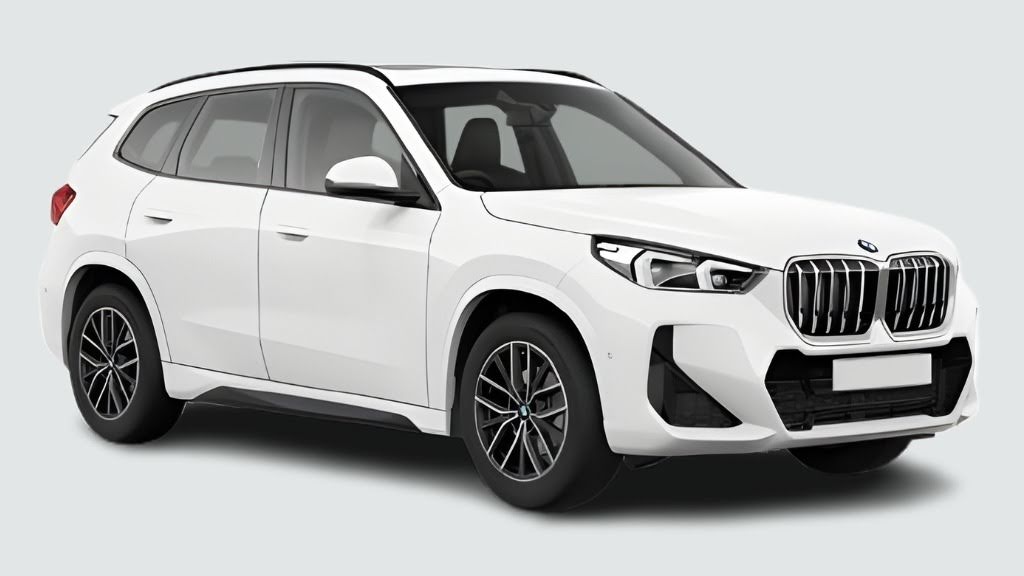
The X1 has the widest price spread of any used BMW, from around Rs 4 lakh for a 2010-2012 first-generation (E84) car to Rs 39-47 lakh for a near-new 2024-2026 example [Source: CarDekho, 19 Sep 2026]. The locally built second-generation F48 (2016-2022) is what most buyers actually mean by a used BMW SUV: 2016-2017 cars at Rs 12.5-18 lakh, 2018-2020 cars at Rs 18-28.5 lakh. The current U11 generation starts near Rs 24 lakh for a 2021-2023 car. Local assembly kept new prices competitive, so the F48 lost value faster than the 3 Series over the same years, good news for a buyer wanting the badge and SUV practicality without 5 Series money.
BMW X3 and X5: the step-up SUVs
The X3 (current G01 from 2017) ranges from around Rs 15.5 lakh for a high-mileage 2016-2017 F25 car to Rs 51-72 lakh for a 2024-2025 G01 [Source: CarDekho, CarWale, 19 Sep 2026]. The X5 spans an even wider band: 2015-2017 F15 cars from Rs 18-39 lakh, 2020-2022 G05 cars at Rs 38.5-69 lakh, near-new 2023-2026 cars from Rs 72 lakh to over Rs 1.1 crore. At that top end, compare against Motozite’s new-car listings, since the depreciation gap narrows fast once a car is under three years old. Both SUVs make more sense used than new for a buyer wanting real size without 7 Series money, but both cost meaningfully more to run than the sedans.
Reliability: what actually goes wrong, by engine
The single most important check on any pre-2015 BMW diesel is the timing chain. The N47 diesel, used across the 3 Series, 5 Series, X1 and X3 through roughly 2007-2014, has a well-documented timing chain guide wear issue that can cause chain slip or failure, typically surfacing between 100,000 and 150,000 km on stretched service intervals [Source: BMW N47 documentation, Wikipedia; BMWCoop, 19 Sep 2026]. This is UK and European workshop data, not an India-specific study, since no equivalent large-sample Indian survey exists publicly, but Indian independent specialists report the same pattern on the same hardware. A cold-start rattle from the front of the engine is the classic warning sign [Source: Kamdhenu Cars, 19 Sep 2026].
The petrol N20 four-cylinder (2012-2016 320i, 328i, and X1/X3 sDrive20i variants) has a similar but milder tensioner wear pattern reported internationally, plus occasional water pump and electric thermostat failures [Source: BMW N20 documentation, 19 Sep 2026]. Neither issue is universal; cars serviced strictly on BMW’s intervals with genuine oil largely avoid it, which is why full service history matters more here than on a mainstream brand.
Three other things recur across owner and workshop sources: electrical faults in ageing infotainment and sunroof modules past eight years old, air suspension compressor wear on X5 and 7 Series air-sprung variants (check whether the car sits level overnight), and international brand-reliability data such as RepairPal’s, where BMW scores 2.5 out of 5.0 against a broader average nearer 3.0 [Source: RepairPal, 19 Sep 2026]. That is US-market data, so treat it as directional, but it matches what Indian multi-brand specialists describe: cars that reward a buyer who budgets for maintenance rather than expecting Maruti-like running costs.
What a used BMW actually costs to run
Annual servicing on an out-of-warranty BMW runs roughly Rs 20,000-30,000 for a 3 Series or X1, Rs 28,000-40,000 for a 5 Series, and Rs 35,000-55,000 for an X5 at authorised centres, with independent specialists typically 30-50% cheaper for the same post-warranty work [Source: Ride N Repair, 19 Sep 2026]. The costs that catch first-time buyers off guard are higher: a timing chain replacement on an affected N47 or N20 can run Rs 85,000 to over Rs 1.5 lakh, a late-caught electric water pump failure can cause secondary damage costing well over Rs 2 lakh, and run-flat tyres, standard on most BMWs sold here, cost more per tyre than a comparable conventional tyre and cannot be repaired after a puncture. Add insurance (roughly Rs 30,000-50,000 a year on a used 5 Series or X3), and a realistic five-year budget beyond fuel and the EMI runs around Rs 8-9 lakh for a mid-size BMW [Source: Cars24, 19 Sep 2026]. None of this makes a used BMW a bad buy; it makes the purchase price the smaller half of the decision.
What to check before buying
Start the engine cold, first thing in the day, and listen for a rattle from the front before it warms up. Check the valve cover, oil filter housing and oil pan for seepage, common on higher-mileage cars. Watch the temperature gauge on a test drive and ask about water pump history. On air-suspension SUVs, check the car sits level after standing overnight. Check the boot and carpets for water staining, since damage near a BMW’s electronics is costlier to fix than on a simpler car. Above all, insist on documented service history; a used BMW with gaps in servicing is a real risk regardless of how clean it looks [Source: Kamdhenu Cars, 19 Sep 2026]. Buying through a marketplace like Motozite makes this easier than a roadside purchase, since listings can be filtered by year, variant and location and checked against seller history first.
Which used BMW suits your budget
Under Rs 15 lakh, the realistic choice is a 2015-2017 F48 X1 or an older F30 3 Series, both putting you in a BMW for roughly what a loaded Hyundai Creta costs, provided the service history checks out. Between Rs 20-35 lakh, a 2018-2020 X1, a well-kept later F30 or early G20 3 Series, or an early G30 5 Series make sense, genuinely the sweet spot: recent enough to avoid most N47-era risk, old enough to have shed the steepest depreciation. Above Rs 40 lakh, buyers are really choosing between a lightly used X3/X5 and a heavily discounted near-new 3 or 5 Series, worth comparing directly against Motozite’s new-car BMW listings at that point, since the price and warranty gap narrows fast.
Frequently asked questions
Is it safe to buy a pre-owned BMW in India?
Yes, provided it has documented service history and passes an inspection focused on the timing chain, cooling system and electricals. The purchase price is only half the decision; budgeting for post-warranty maintenance matters just as much.
Which used BMW model is most reliable in India?
No India-specific reliability survey exists at model level, but post-2015 X1 (F48) and post-2016 G30 5 Series and G20 3 Series generally avoid the N47 diesel’s timing chain weakness and carry longer, better-documented service histories.
How much does it cost to maintain a used BMW in India?
Routine servicing runs roughly Rs 20,000-55,000 a year depending on model, rising sharply if the timing chain, water pump or air suspension needs work. A realistic five-year budget beyond fuel and EMI is around Rs 8-9 lakh for a mid-size model.
Are BMW run-flat tyres expensive to replace in India?
Yes. They cost more per tyre than standard tyres of the same size and cannot be repaired after a puncture, so budget for tyre replacement rather than treating it as a rare expense.
Should I buy a diesel or petrol used BMW?
Both the N47 diesel and N20 petrol from roughly 2010-2016 carry a documented timing chain wear risk internationally, so service history and a cold-start check matter more than fuel type. Post-2017 engines largely moved past this issue.
