
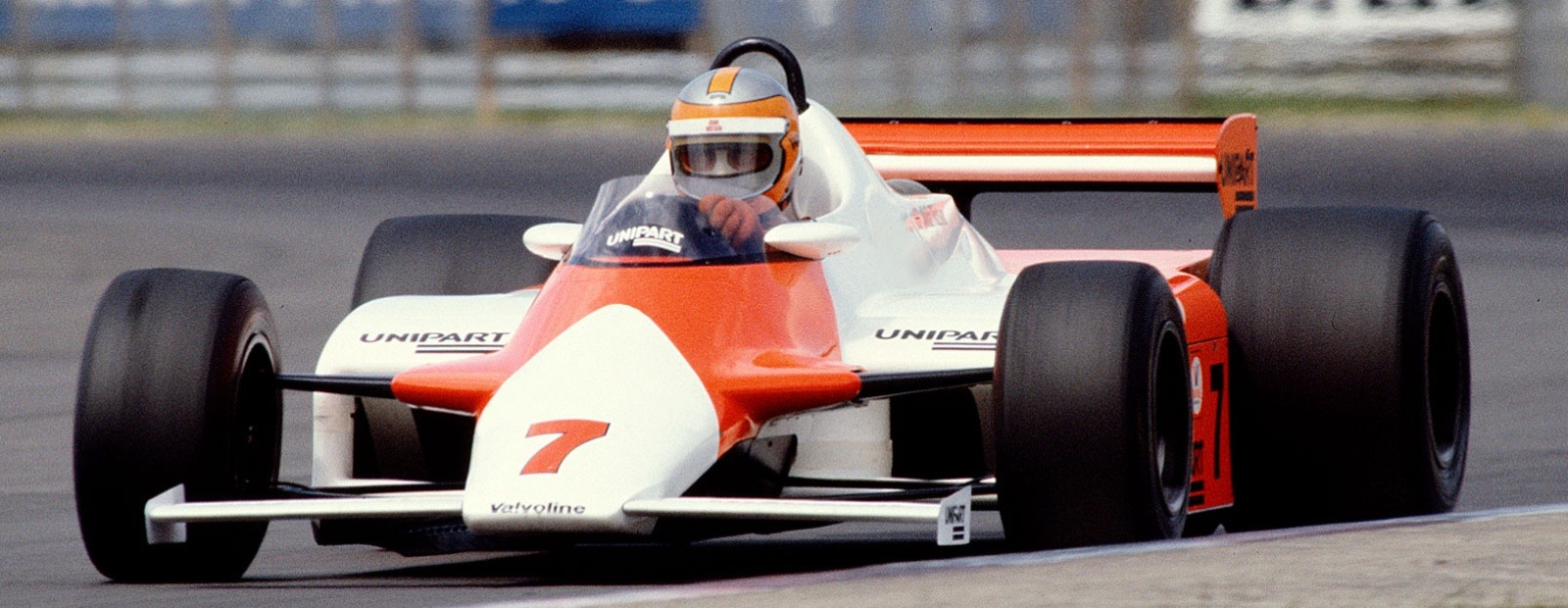
McLaren was founded in 1963 as Bruce McLaren Motor Racing by Bruce McLaren, a New Zealand racing driver. It started its first Formula 1 race at Monaco in 1966, won its first Grand Prix in 1968, and lost its founder in a testing crash at Goodwood in 1970. It went on to become the second most successful team in Formula 1, behind only Ferrari, with 13 drivers’ titles and 10 constructors’ titles, the most recent in 2025. Its road-car business is much younger: McLaren Automotive sold its first car, the 12C, in 2011. Since April 2025, that business has been owned by Abu Dhabi’s CYVN Holdings, and in India McLaren is sold through a single importer in Mumbai.
Read McLaren’s history as a list of trophies, and it looks like a steady climb. It wasn’t. The pattern is sharper than that: McLaren has repeatedly out-engineered everyone else, and then repeatedly had to rescue itself, on the track and off it. That tension explains a lot about the cars it sells today, and about what an Indian buyer should expect from the brand over the next few years.
McLaren timeline at a glance
| Year | Milestone |
| 1963 | Bruce McLaren founded Bruce McLaren Motor Racing Ltd |
| 1966 | First Formula 1 race, Monaco, 22 May |
| 1967 to 1971 | Five consecutive Can-Am constructors’ championships |
| 1968 | First Grand Prix win, Belgium, 9 June |
| 1970 | Bruce McLaren killed testing at Goodwood, 2 June |
| 1974 | First F1 constructors’ and drivers’ titles (Emerson Fittipaldi); first Indy 500 win |
| 1976 | James Hunt’s world title; second Indy 500 win |
| 1981 | MP4/1, the first F1 car with a carbon-fibre composite chassis |
| 1988 | MP4/4 wins 15 of 16 races |
| 1992 | McLaren F1 road car launched |
| 1995 | Le Mans win at the first attempt |
| 2008 | Lewis Hamilton’s world title |
| 2011 | McLaren Automotive’s first car, the 12C, goes on sale |
| 2013 | P1 hybrid hypercar |
| 2020 | About 1,200 jobs cut; £150m loan from the National Bank of Bahrain |
| 2022 | First Indian showroom opens in Mumbai |
| 2024 | Ninth constructors’ title; W1 hypercar revealed |
| 2025 | CYVN completes purchase of McLaren Automotive; 10th constructors’ title; Lando Norris world champion |
| 2026 | 1,000th Grand Prix start, Monaco; India-UK trade deal takes effect |
Sources: McLaren Racing, Formula1.com, Reuters, Just Auto, Autocar India.
1963 to 1970: Bruce McLaren’s team
Bruce McLaren was a New Zealander who had moved to Europe to race, and in 1963 he set up Bruce McLaren Motor Racing Ltd. Formula1.com describes how he entered his own Ford-powered M2B at Monaco on 22 May 1966. It lasted nine laps before an oil leak stopped it.
The breakthrough came two years later at Spa. McLaren’s own account of the 1968 Belgian Grand Prix is a reminder of how much luck early wins needed. Bruce qualified seventh, fell to near the back on the first lap, and moved up as faster cars broke down. When the leader, Jackie Stewart, stopped for fuel on the last lap and his car would not restart, Bruce inherited the win. He only found out he had won when a BRM mechanic told him in the pit lane. He became the third driver, after Jack Brabham and Dan Gurney, to win a Grand Prix in a car carrying his own name.
The team’s real dominance in those years came in North America. McLaren won 43 Can-Am races and five consecutive constructors’ championships between 1967 and 1971, according to its official honours list. Then, on 2 June 1970, Bruce was testing his M8D Can-Am car at Goodwood when bodywork came loose on the back straight. The car spun off into a bunker, and he was killed. He was 32.
That the team survived losing its founder, who was also its lead driver, is the first sign of the resilience that runs through this story.
1974 to 1979: titles, and then a slide
McLaren won its first Formula 1 constructors’ championship in 1974, with Emerson Fittipaldi taking the drivers’ title in the M23. James Hunt won the drivers’ title in the same car in 1976. In America, Johnny Rutherford won the Indianapolis 500 in 1974 and again in 1976. McLaren counts three Indy 500 wins in all. Add its many Monaco wins and its 1995 Le Mans victory, and McLaren can claim what motorsport calls the Triple Crown: Monaco, Indianapolis and Le Mans.
Then the cars fell behind. By the time John Watson won the 1981 British Grand Prix, it was McLaren’s first win in four years.
The 1980s: Ron Dennis, carbon fibre and the MP4/4
What fixed McLaren was a merger and a material. At the start of the 1980s, the team combined with Ron Dennis’s Project Four Racing, which is why its cars have been called MP4 (McLaren Project Four) ever since. Designer John Barnard had been developing a radical idea, a chassis made entirely from carbon-fibre composite, and Dennis backed him to build it.
The result, the MP4/1, made its debut on 5 March 1981. McLaren says it was the first Formula 1 car with a carbon composite chassis, and Watson’s Silverstone win later that year was the first victory for one. Carbon composite chassis soon became the norm in Formula 1, and a carbon tub sits under every McLaren road car sold today.
The titles followed quickly: Niki Lauda in 1984, Alain Prost in 1985 and 1986. Then came 1988. With Ayrton Senna and Prost as teammates and Honda power, the MP4/4 won 15 of the season’s 16 races, including a record 11 in a row, according to Formula1.com. The only race it lost was Monza, where Senna crashed while lapping a backmarker. Senna took the title that year and again in 1990 and 1991, with Prost winning in 1989 in between.
Our view: 1988 is the season that defines McLaren’s reputation, but the MP4/1 matters more. A dominant season ends. A change in how racing cars are built does not.
1992 to 1998: the McLaren F1 road car
McLaren’s first production road car arrived in 1992, and it was not a business plan so much as a manifesto. Designed by Gordon Murray, the McLaren F1 seated three, with the driver in the middle, used a 6.1-litre BMW V12, and topped 240mph, which made it the fastest production car until the Bugatti Veyron in 2005, as Motor1 notes. Only 106 were built between 1992 and 1998, counting prototypes, road cars and race cars.
The F1 also delivered McLaren’s Le Mans win. A racing version, the F1 GTR, won the 24 Hours in 1995, the team’s first attempt.
On track, Mika Häkkinen gave McLaren drivers’ titles in 1998 and 1999, and the constructors’ title in 1998. Lewis Hamilton won in 2008, at 23 years and 300 days. Then the team went quiet. It would not win another constructors’ championship for 26 years.
2011 to 2024: McLaren Automotive, and the money problem
The modern road-car company is a different business from the team that built the F1. McLaren Automotive launched its first model, the 12C, in 2011, and its first retailer opened that summer. The P1 followed in 2013, which Pirelli describes as the world’s first hybrid hypercar, arriving in the same period as the LaFerrari and Porsche 918 Spyder. The range filled out with the 570S in 2015, then the Senna, the Speedtail and the Artura, a 680hp V6 plug-in hybrid.
The engineering was strong. The finances were not. In 2020, with the pandemic hitting sales, McLaren Group cut about 1,200 jobs across its racing, automotive and technology businesses, and arranged a £150m loan from the National Bank of Bahrain, according to Formula1.com. McLaren had also explored borrowing against its Woking headquarters and heritage car collection. At the time, Bahrain’s sovereign wealth fund Mumtalakat owned 56 percent of the group.
The racing team recovered first. McLaren won the constructors’ title in 2024, its ninth, and on 6 October 2024 the road-car side revealed the W1, a 1,275hp plug-in hybrid with a new 4.0-litre twin-turbo V8, limited to 399 cars that were all sold before the reveal. McLaren positioned it as the successor to the F1 and the P1.
2025 and 2026: new owners and a second golden era
In April 2025, Abu Dhabi-based CYVN Holdings completed its purchase of McLaren Automotive and a non-controlling stake in McLaren Racing, Just Auto reported. The car business was combined with Forseven, a British luxury start-up, under a new company, McLaren Group Holdings, led by Forseven’s former chief executive, Nick Collins.
On track, 2025 was McLaren’s best season in decades. It clinched its 10th constructors’ championship in Singapore in October, making it only the second team in Formula 1 to reach double figures, and its first back-to-back titles since 1990 and 1991. In December, Lando Norris won the drivers’ championship in Abu Dhabi by two points, McLaren’s first drivers’ title since 2008. In June 2026 at Monaco, McLaren became only the second team after Ferrari to start 1,000 Grands Prix, Reuters reported.
The road-car range is about to change completely. Autocar India reported on 9 October 2026 that 750S production will end in 2027, that the Artura and GTS are due to be discontinued by 2028, and that McLaren is developing its first SUV, a hybrid that will be the first front-engined McLaren road car. It is also setting up a UK factory to build its own engines and gearboxes for the first time.
McLaren in India
McLaren entered India in 2021 and opened its first showroom in Mumbai in November 2022, run by its importer Infinity Cars. It had delivered about 50 cars in India by early 2025, according to Autocar India.
The bigger change for Indian buyers came this year. The India-UK free trade agreement came into force on 15 July 2026, Business Today reported, cutting the duty on qualifying British cars from 110 percent to 30 percent within an annual quota, falling to 10 percent by the fifth year. Hybrids do not qualify for the lower rate in the first five years. McLaren’s V8 cars do.
| Model | Price before FTA (ex-showroom) | Price reported after FTA | Powertrain |
| McLaren 750S Coupe | Rs 7.94 crore | Rs 4.94 crore | 4.0 twin-turbo V8 |
| McLaren 750S Spider | Rs 8.78 crore | Rs 5.46 crore | 4.0 twin-turbo V8 |
| McLaren GTS | Rs 6.15 crore | Rs 3.83 crore (expected) | 4.0 twin-turbo V8 |
| McLaren Artura | Rs 5.10 crore | No change expected | 3.0 V6 plug-in hybrid |
Sources: Autocar India (10 June 2026 and 9 October 2026), Business Today (15 July 2026). The 750S figures are from Autocar India’s 9 October 2026 report; the GTS figure was reported as expected and McLaren had not confirmed it in the sources we checked. Prices are before options.
That creates an odd situation: the 680hp Artura now costs more in India than the 750hp 750S Coupe, the more powerful car.
Our view for Indian buyers: if you have been waiting for a McLaren, the duty cut makes a 750S the obvious choice right now, and its run-out in 2027 means the order window is closing. The Artura only makes sense if you specifically want a hybrid. Anyone buying today should also accept that all three current models are due to end production by 2028, and outgoing models usually take a bigger hit on resale. Plan to keep the car, or factor that in.
For the same problem from the other side, our Lamborghini Urus SE review explains how India’s trade deals leave plug-in hybrids out. For more on supercar pricing in India, read our list of the most expensive luxury cars in India.
What McLaren’s history tells you
- Its biggest wins came from engineering bets. Carbon fibre in 1981, a three-seat, 240mph road car in 1992, a hybrid hypercar in 2013. When McLaren bet on a new idea, it usually set the standard others followed.
- Its biggest risks came from money. The 2020 job cuts, the Bahrain loan and the 2025 sale of the car business all point to the same thing: a small, independent maker with racing-team costs is always one bad year from trouble.
- The racing team and the car company now have different owners. That matters. A title-winning F1 team no longer guarantees the health of the road-car business, and the success of the coming SUV will probably decide that business’s future more than anything that happens on track.
If you enjoy brand histories, read our history of Ferrari, the only team with more F1 success than McLaren, along with our histories of Lamborghini, Bugatti and Jaguar.
FAQ
Who founded McLaren and when?
McLaren was founded by New Zealand racing driver Bruce McLaren, who set up Bruce McLaren Motor Racing Ltd in 1963. The team made its Formula 1 debut at Monaco in 1966 and won its first Grand Prix, in Belgium, in 1968.
How did Bruce McLaren die?
Bruce McLaren died on 2 June 1970, aged 32, while testing his McLaren M8D Can-Am car at Goodwood in England. Bodywork came loose on the back straight and the car crashed.
How many Formula 1 championships has McLaren won?
McLaren has won 13 drivers’ championships and 10 constructors’ championships. Its drivers’ champions are Emerson Fittipaldi, James Hunt, Niki Lauda, Alain Prost (three titles), Ayrton Senna (three), Mika Häkkinen (two), Lewis Hamilton and Lando Norris, who won in 2025.
Who owns McLaren now?
Abu Dhabi-based CYVN Holdings owns McLaren Automotive, the road-car company, after completing its purchase in April 2025. The car business was merged with start-up Forseven under McLaren Group Holdings. CYVN also holds a non-controlling stake in McLaren Racing, which runs the Formula 1 team.
What was McLaren’s first road car?
The McLaren F1, launched in 1992, was the company’s first production road car. Designed by Gordon Murray, it had a central driving seat, a BMW V12 and a top speed of 240mph. The current road-car company, McLaren Automotive, launched its first model, the 12C, in 2011.
How much does a McLaren cost in India?
After the India-UK trade deal, Autocar India reported the McLaren 750S at Rs 4.94 crore for the Coupe and Rs 5.46 crore for the Spider (ex-showroom, October 2026). The Artura plug-in hybrid stays at Rs 5.10 crore because hybrids do not get the lower duty in the deal’s first five years. McLaren is sold in India through its Mumbai importer.
