
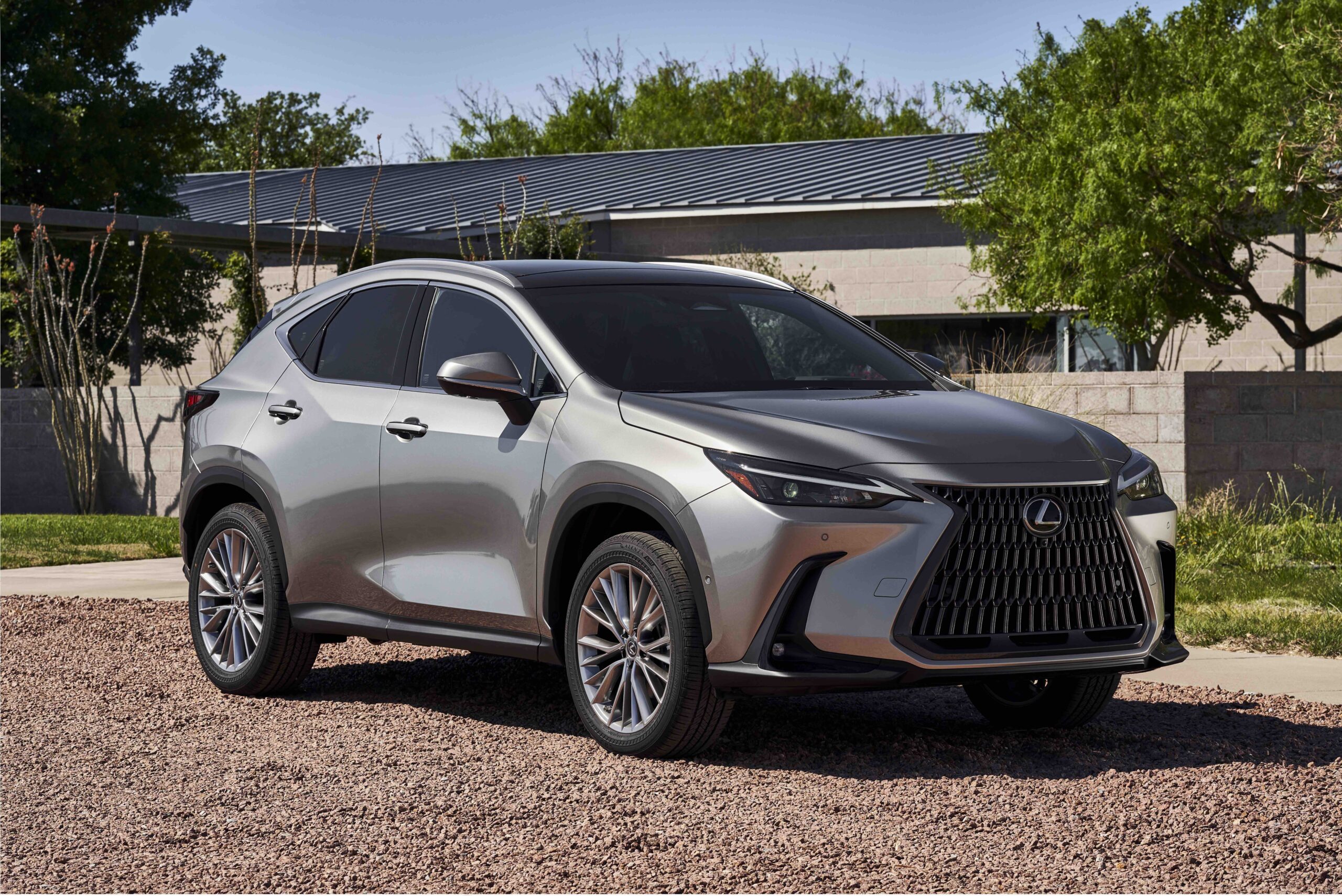
Lexus is the most reliable luxury car brand on every major survey available, and it is the only luxury brand in India that backs that record with an eight-year standard warranty. In J.D. Power’s 2026 Vehicle Dependability Study, Lexus recorded 151 problems per 100 vehicles (PP100), the best score of any brand, against an industry average of 204. Consumer Reports’ latest rankings put Lexus third overall and first among luxury brands. The German brands are not one story, though. BMW is close behind Lexus on Consumer Reports’ numbers, while Mercedes-Benz and Audi sit below average in both studies.
There is an important catch: both surveys measure American owners. Here is what the data says, how much of it carries over to Indian roads, and how to use it when you buy.
Luxury car reliability scorecard (2026)
| Brand | J.D. Power VDS 2026 (PP100, lower is better) | Consumer Reports 2026 (score out of 100, higher is better) |
| Lexus | 151 | 60 |
| Mini | 168 | Not ranked |
| Porsche | 182 | Not ranked |
| BMW | 198 | 58 |
| Industry average | 204 | n/a |
| Mercedes-Benz | 235 | 41 |
| Audi | 244 | 44 |
| Land Rover | 274 | Not ranked |
| Volvo | 296 | 42 |
J.D. Power surveyed owners of 2023 model-year vehicles after three years of ownership; the premium-segment average was 217 PP100. Consumer Reports covers around 380,000 vehicles and ranks only brands with enough data on at least two models, which is why Porsche, Land Rover and Mini have no score. Sources: J.D. Power release via Business Wire (12 Feb 2026), Motor1, Visual Capitalist, Cars.com (4 Dec 2025).
Two things jump out. Lexus leads both studies, and J.D. Power says it has been the top premium brand for four years running. And “German” is not a useful category: BMW is above average in both studies, while Mercedes-Benz and Audi are below average in both.
Do American reliability surveys apply to India?
Partly. The cars are broadly the same, but the conditions are not. Indian owners deal with heat, dust, broken roads, flooding in the monsoon, variable fuel quality and a lot of slow city traffic. Those conditions are harder on suspension, cooling systems and electronics than an American suburb. Indian models also differ in some powertrains, and many are assembled locally.
No study in India measures luxury-car dependability the way J.D. Power and Consumer Reports do in the US. So treat the American numbers as a guide to how well a brand engineers and builds its cars, not as a forecast for your car in Chennai or Gurugram. Then look at the things you can check locally: the warranty, the service network, and the specific powertrain.
Why Lexus keeps winning
Three things show up in the data.
Its hybrids are the reliable kind. Consumer Reports found traditional hybrids among the most reliable powertrains, and plug-in hybrids and EVs over-represented among the worst. That matters for Lexus in India, where about 90 percent of the cars it sells are hybrids, according to Lexus India’s president in an Autocar India interview (January 2025). But don’t assume every hybrid is trouble-free. J.D. Power’s 2026 study put hybrids at 213 PP100, worse than petrol and diesel cars at 198, and plug-in hybrids worst of all at 281. Lexus does well because of its own hybrids, not because hybrids are inherently simple.
Fewer problems with electronics. Infotainment is the most problem-prone area in J.D. Power’s study, at 56.7 PP100 across the industry, with Apple CarPlay and Android Auto connectivity the single most common complaint for the third year in a row. Brands that load their cars with screens and connected features tend to collect more of these complaints. That is a likely reason feature-heavy German cars lose marks, though the brand-level results don’t break it down.
Proven hardware. Consumer Reports also found that newly introduced or redesigned models tend to have more problems early on. A brand that refines a powertrain over many years, rather than chasing the newest tech at launch, is less likely to hand owners the teething trouble.
BMW vs Mercedes vs Audi: the German brands are not equal
If you are cross-shopping German brands on reliability, the numbers point to BMW.
- BMW scored 58 with Consumer Reports, two points behind Lexus and fifth among all brands. Its 198 PP100 in J.D. Power’s study is a little better than the industry average of 204.
- Mercedes-Benz scored 41 with Consumer Reports and 235 PP100 with J.D. Power. Both are below average.
- Audi scored 44 and 244 PP100. Also below average on both.
Our view: a 2026 BMW is a much safer bet on dependability than many Indian buyers assume, while Mercedes and Audi buyers should budget more seriously for out-of-warranty repairs. For the specific faults that crop up on German cars in India, from cooling systems to air suspension, see our guide to common problems in German luxury cars.
Warranty: the reliability signal you can actually bank
A survey tells you about other people’s cars. A warranty tells you what the manufacturer will pay for on yours. On this, Lexus stands well apart in India.
- Lexus: an 8-year or 160,000km vehicle warranty on all new Lexus cars sold in India from 1 June 2024, up from 3 years or 100,000km, according to Lexus India. The hybrid battery warranty runs to 8 years or 160,000km in total, including Lexus’s special additional battery warranty. The battery cover transfers to the next owner for the remaining period, but only if the car has had scheduled Hybrid Care maintenance at an authorised Lexus dealership throughout.
- BMW: a 24-month standard warranty, which owners can extend for up to six years with unlimited mileage through BMW’s Repair Inclusive package, according to BMW Group India’s 2020 announcement. BMW says Repair Inclusive transfers with the car.
- Mercedes-Benz: a three-year standard warranty, with paid extensions into the fourth to sixth years and no mileage cap for private buyers, as reported by Autocar India when the programme launched in 2017. The extension is transferable.
- Audi: for cars sold in 2022, Audi India included a five-year extended warranty package with unlimited mileage, according to Motoring World.
The German brands’ terms above come from announcements made between 2017 and 2022, and packages change often. Ask the dealer for the current written terms before you buy, new or used.
The practical difference is this: on a Lexus, eight years of cover come as standard. On a German car, you pay for anything beyond the first two or three years. If you plan to keep a car for eight years, put the cost of extended warranty into your comparison.
Reliability is not the same as ownership experience
A car that rarely breaks is only half the story. When it does need work, how far is the nearest workshop, and how quickly do parts arrive?
This is where the German brands claw back ground. Lexus is a small brand in India. Autocar India reported in January 2025 that industry sources put its sales at around 2,800 cars a year, below every other luxury carmaker here, and the ES sedan alone accounts for more than half of that. Its dealer network is correspondingly small. Mercedes-Benz, BMW and Audi sell far more cars and have far wider service networks, which means a better chance of a workshop in your city and more independent specialists who know the cars.
So check the map before you check the survey. A Lexus is the most dependable choice in Delhi, Mumbai or Bengaluru. In a city without a Lexus workshop, a well-maintained BMW with an extended warranty may be the easier car to own.
What this means for your next luxury car
- Buying new and keeping it eight years or more: Lexus is the strongest choice on reliability and warranty, provided there is an authorised workshop within reasonable reach.
- Buying new German: BMW has the best dependability record of the three. With any German brand, price the extended warranty into the deal on day one.
- Buying pre-owned Lexus: check that the full service history is from an authorised Lexus dealership, because the hybrid battery warranty depends on it. You can browse pre-owned Lexus cars listed on Motozite.
- Buying pre-owned German: a manufacturer-certified car with remaining warranty is worth paying extra for. Our comparison of BMW, Mercedes, Audi and Volvo certified pre-owned programmes explains what each one covers.
- Avoid the first year of a new model, whatever the badge. Consumer Reports’ data shows newly launched and redesigned models carry more early problems.
If running costs matter as much as breakdowns, our explainer on why maintenance costs vary between luxury brands is the companion read. You can also see the current Lexus line-up and prices.
FAQ
Which is the most reliable luxury car brand?
Lexus. It had the fewest problems of any brand in J.D. Power’s 2026 Vehicle Dependability Study, at 151 problems per 100 vehicles against an industry average of 204, and was the top premium brand for the fourth year running. Consumer Reports’ latest rankings also put Lexus first among luxury brands, with a score of 60 out of 100.
Is Lexus more reliable than BMW?
Yes, but the gap is smaller than many buyers assume. Consumer Reports scores Lexus at 60 and BMW at 58 out of 100. In J.D. Power’s 2026 study, Lexus recorded 151 problems per 100 vehicles and BMW 198, which is still slightly better than the industry average of 204.
Are German luxury cars reliable?
It depends on the brand. BMW is above average in both J.D. Power’s and Consumer Reports’ latest studies. Mercedes-Benz (235 PP100, score 41) and Audi (244 PP100, score 44) are below average in both. Electronics and infotainment are the most common problem area across the industry.
What warranty does Lexus offer in India?
Lexus India offers an 8-year or 160,000km vehicle warranty, whichever comes first, on all new cars sold from 1 June 2024. The hybrid battery is covered for a total of 8 years or 160,000km, and that battery cover transfers to the next owner if the car has been maintained at authorised Lexus dealerships.
Are hybrid luxury cars more reliable?
Not automatically. Consumer Reports found traditional hybrids among the most reliable powertrains, but J.D. Power’s 2026 study recorded 213 problems per 100 vehicles for hybrids against 198 for petrol and diesel cars, and 281 for plug-in hybrids. Lexus’s hybrids score well; the label alone tells you little.
Do these reliability rankings apply to India?
Only as a guide. Both J.D. Power and Consumer Reports survey American owners, and Indian heat, dust and roads are harder on cars. Use the rankings to judge how well a brand builds its cars, then check the Indian warranty, the service network in your city and the specific engine before you buy.
