
Six nameplates genuinely clear the ₹1.5 crore to ₹2 crore ex-showroom band in India right now: the BMW 7 Series and i7, the Porsche Cayenne GTS and Panamera, the Range Rover Sport in its Autobiography and Twenty Edition trims, and the top V8 versions of the Land Rover Defender. That is a shorter list than most “best luxury cars” roundups suggest, and the reason is simple: GST 2.0 pushed a lot of cars that used to sit in this bracket either below it or above it, and this guide only counts a car if its actual ex-showroom price, checked against multiple sources this month, falls inside the band.
This is a deliberately narrow price window, and it sits at an odd point in the market. Go slightly cheaper, and the Mercedes-Benz GLS and BMW X7 crowd the segment; go slightly more expensive, and the S-Class and full-size Range Rover take over. What is actually left standing between ₹1.5 crore and ₹2 crore, once you check every price rather than assume it, is worth spelling out car by car, including the ones that missed the cut and by how much.
Why This Band Looks Different After GST 2.0
Ranking criteria first: every car below is included only if a verified ex-showroom price, cross-checked across at least two independent sources, lands at ₹1.5 crore or above and no higher than ₹2 crore. Where a model is sold in multiple variants, the entry covers whichever specific trims cross into the band, not the whole range, because most of these nameplates straddle the boundary rather than sitting neatly inside it.
The September 2025 GST 2.0 overhaul is the reason this band looks so different from what it did two years ago. The reform lowered ex-showroom prices across a wide swath of the market, and the effect on this segment specifically was to push several long-time ₹1.5-2 crore regulars, the Mercedes-Benz GLS chief among them, down into the sub-₹1.5 crore band instead. January 2026 list-price increases of 2 to 3 percent clawed back some of that saving, but not enough to pull the GLS back over the floor. At the other end, Mercedes-Benz dropped the diesel S 350d from the facelifted S-Class lineup entirely, leaving only plug-in hybrid S 450e variants that now start above ₹2 crore, which knocks the segment’s best-known nameplate out of this list altogether. Worth reading alongside this: our breakdown of exactly how GST 2.0 changed Mercedes and BMW pricing, and if ₹1.5 crore is more than you want to spend, the segment just below has its own best luxury cars under ₹1 crore shortlist.
Browse everything currently listed in this exact bracket on Motozite’s ₹1.5-2 crore new car inventory while you read through the reasoning below.
The Cars That Genuinely Clear ₹1.5-2 Crore
BMW 7 Series 740 – ₹1.95 Crore
The 740 is the sole surviving petrol variant of the facelifted 7 Series, and at ₹1.95 crore ex-showroom, it clears the floor by a wide margin and sits just ₹5 lakh under the ceiling. BMW has stopped offering a diesel or a lower-spec trim on this generation in India, so there is no cheaper way into a new 7 Series, and no version of it strays above ₹2 crore either. That single-variant strategy is unusual for a full-size luxury sedan, but it is what keeps the 740 comfortably inside this band rather than spanning across it.
For Indian roads specifically, the 740’s air suspension does a better job smoothing broken tar than most rivals at this price manage, and the M Sport-only trim means you are not choosing between a stripped-out base car and a loaded one; every 740 sold here comes fully equipped.
BMW i7 eDrive50 – ₹1.95 Crore
BMW priced the base electric i7 identically to the petrol 740 at launch, ₹1.95 crore ex-showroom, which is unusual: EVs in this segment typically carry a premium over their combustion siblings. That price parity is the whole story here. A buyer choosing between the 740 and the eDrive50 isn’t trading up or down in budget; they’re choosing between a 3.0-litre turbo-six and a 536bhp electric motor with a claimed 625km range, at the exact same rupee figure.
The eDrive50 clears the floor with room to spare and sits under the ceiling by the same ₹5 lakh as the 740. Step up to the performance-focused i7 M70 xDrive, though, and the price jumps to ₹2.65 crore, well clear of this band’s ceiling, which is why only the base eDrive50 appears here and not the full i7 range.
Porsche Cayenne GTS – ₹1.94 Crore
The GTS is the only Cayenne variant that clears ₹1.5 crore. At ₹1.94 crore ex-showroom, it sits ₹6 lakh under the ceiling, comfortably inside the band. Its 4.0-litre twin-turbo V8 makes it the most overtly performance-oriented SUV on this list, and that shows in how it drives: firmer damping, sharper steering, less of the wafting ride Range Rover buyers expect at a similar price.
The standard Cayenne, by contrast, is priced at ₹1.39 crore, which puts it ₹11 lakh below the floor and out of this list entirely. One source lists the base Cayenne at ₹1.51 crore rather than ₹1.39 crore, which would flip it into the band. We’re treating ₹1.39 crore as the correct figure because it’s confirmed independently by CarDekho, CarWale, ZigWheels, and Team-BHP, and because Autocar’s own city-wise on-road price pages for the Cayenne are arithmetically consistent with a ₹1.39 crore ex-showroom base, not a ₹1.51 crore one. Flagging it here so the editor can double-check before this goes live.
Porsche Panamera – ₹1.71 Crore
The base Panamera, now a plug-in hybrid as standard, is priced at ₹1.71 crore ex-showroom, squarely in the middle of this band with room on both sides. It is the only car on this list that pairs genuine four-door saloon comfort with real electric-only range for city driving, which matters in Indian metros where a 40- 50 km EV-only commute covers most people’s daily use.
Push further up the Panamera range and the GTS variant, with its 4.0-litre twin-turbo V8, jumps to ₹2.33 crore, well past the ceiling. So while the Panamera nameplate spans a wide price range, only the base hybrid actually lives inside ₹1.5-2 crore.
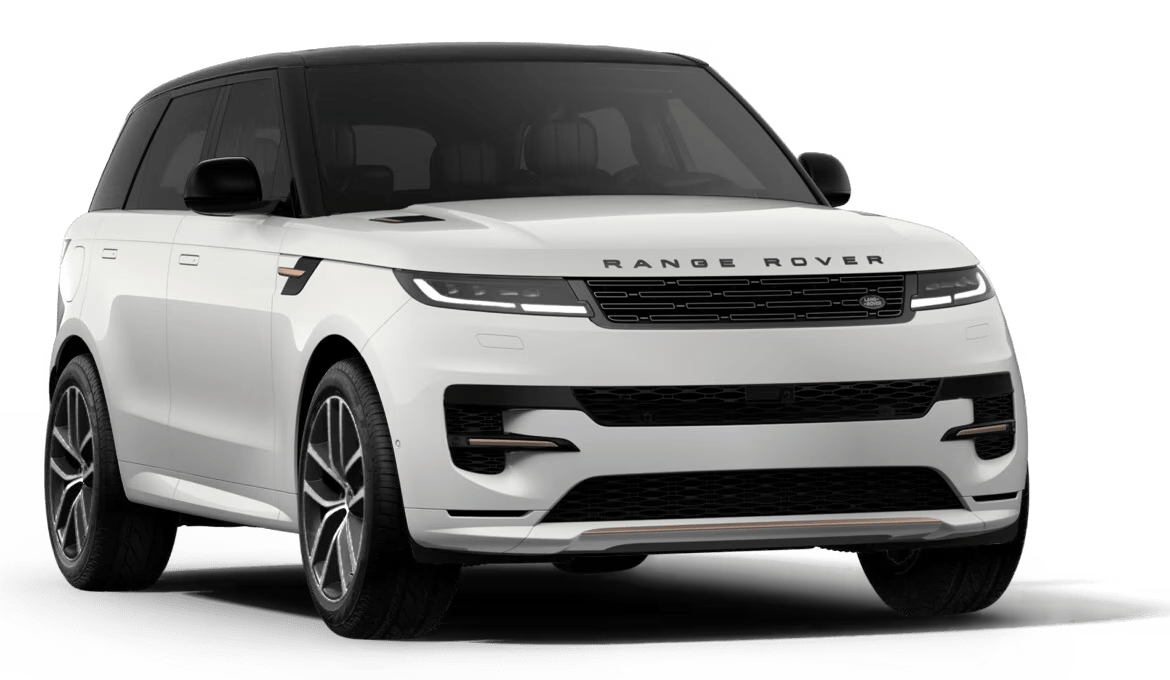
Range Rover Sport Autobiography and Twenty Edition – ₹1.60 Crore to ₹1.90 Crore
The Range Rover Sport is the one nameplate on this list where two separate trims both clear the floor without touching the ceiling. The Autobiography, at ₹1.60 crore, clears the floor by ₹10 lakh; the Twenty Edition, at ₹1.90 crore, still sits ₹10 lakh under the ceiling. Both are mild-hybrid petrol or diesel, and both get the air suspension and active roll control that make the Sport ride noticeably better on Indian expressway expansion joints than the standard steel-sprung SUVs nearby in price.
The entry-level HSE trim, at ₹1.43 crore, misses the floor by ₹7 lakh and doesn’t make this list. At the other end, the SV variant starts at ₹2.05 crore, and the SV Black and Carbon Editions go up to ₹2.35 crore, all of them over the ceiling. So the Range Rover Sport’s actual footprint in this exact band is the middle two trims, not the whole range.
Land Rover Defender 110 X and 130 (V8) – ₹1.57 Crore to ₹1.86 Crore
This is the most fragmented entry on the list, and deliberately so, because the Defender’s V8 pricing straddles the floor across two body styles. In the short-wheelbase 110, only the top X trim, at ₹1.57 crore, clears ₹1.5 crore; the X-Dynamic HSE V8 just below it, at ₹1.47 crore, misses by ₹3 lakh. In the longer 130, three separate V8 trims land inside the band: the X-Dynamic HSE at ₹1.60 crore, the X at ₹1.70 crore, and the range-topping 130 at ₹1.86 crore.
| Variant | Body | Price (ex-showroom) | In band? |
| 110 X-Dynamic HSE V8 | 110 | ₹1.47 Cr | No, ₹3L under floor |
| 110 X V8 | 110 | ₹1.57 Cr | Yes |
| 130 X-Dynamic HSE V8 | 130 | ₹1.60 Cr | Yes |
| 130 X V8 | 130 | ₹1.70 Cr | Yes |
| 130 (top) V8 | 130 | ₹1.86 Cr | Yes |
| 110 OCTA | 110 | ₹2.42 Cr | No, over ceiling |
All of these run the 5.0-litre supercharged V8, the same engine Land Rover uses to give the Defender genuine highway pace instead of just off-road credibility. If your priority is the extra practicality of the three-row 130’s longer body rather than outright badge prestige, the 130 X-Dynamic HSE at ₹1.60 crore is the more sensible entry point of the group; the 110 X at ₹1.57 crore is the one to pick if you want the shorter, more maneuverable body and don’t need the extra row.
Cars That Miss the Floor (Priced Just Under ₹1.5 Crore)
A cluster of well-known nameplates sit close to, but under, the ₹1.5 crore floor, which is exactly why they show up in generic “luxury car” searches for this segment even though they don’t actually belong here:
- Mercedes-Benz GLS (all six variants, ₹1.32-1.43 crore): this is the clearest illustration of GST 2.0’s effect on the market. The GLS used to sit inside this band; the reform’s price cuts, reported at roughly ₹5-6 lakh across the range, pushed even the range-topping GLS 450d Night Edition to ₹1.43 crore, ₹7 lakh short of the floor.
- BMW X7 (all four variants, ₹1.26-1.37 crore): the top xDrive40d M Sport, at ₹1.37 crore, still falls ₹13 lakh short.
- Land Rover Defender 110 X-Dynamic HSE V8 (₹1.47 crore): the near-miss described above, ₹3 lakh under the floor.
- BMW iX (₹1.40 crore): the only variant sold in India, ₹10 lakh below the floor.
- Audi Q8 (₹1.13 crore): well clear of the floor, not a close call.
- Range Rover Velar and Volvo XC90 (₹87.5 lakh and ₹97.8 lakh on-road respectively): both priced closer to the segment below this one entirely, not near-misses at all.
- Jaguar F-Pace (₹72.9 lakh): currently the only Jaguar model on sale in India, and priced well below this band with no variant anywhere close.
Cars That Cross the Ceiling (Priced Above ₹2 Crore)
The other side of the boundary matters just as much, because several of these are the first car a buyer thinks of at “luxury” price points, and none of them actually fit here anymore:
- Mercedes-Benz S-Class (₹2.20-2.38 crore): the facelifted S-Class dropped its diesel S 350d and now sells only as the plug-in hybrid S 450e, starting ₹20 lakh over the ceiling. This is arguably the single biggest change GST 2.0 and the facelift together made to this price band.
- BMW i7 M70 xDrive (₹2.65 crore): the performance-flagship electric i7, ₹65 lakh over the ceiling and ₹70 lakh above its own eDrive50 sibling.
- Porsche Panamera GTS (₹2.33 crore): ₹33 lakh over, and ₹62 lakh above the base Panamera that does qualify.
- Land Rover Defender 110 OCTA and OCTA Edition One (₹2.42-2.62 crore): the performance-flagship Defender trims, both well clear of the ceiling.
- Range Rover Sport SV, SV Black Edition and SV Carbon Edition (₹2.05-2.35 crore): the SV starts just ₹5 lakh over the ceiling; the Carbon Edition tops out at ₹35 lakh over.
- Range Rover (full-size), now sold exclusively in long-wheelbase form: even the entry HSE trim starts at ₹2.40 crore, ₹40 lakh over the ceiling, with no shorter or lower-spec version available to bring it down.
- Lexus LX (₹2.81-2.93 crore): both variants sit well above the ceiling; there is no version of the LX priced in this band.
- Mercedes-Maybach GLS (from roughly ₹2.75 crore ex-showroom): not a close call; this sits nearly ₹75 lakh over the top of the band.
Not Currently Sold: Audi A8 L
The Audi A8 L is worth a specific mention because its last recorded prices, ₹1.34 crore for the Celebration trim and ₹1.63 crore for the Technology trim, would have put the top variant inside this band. Audi discontinued the A8 L in India in January 2025; however, it is not available for purchase as a new car as of September 2026, so it doesn’t qualify regardless of where its old pricing would have landed.
Which of These Should You Actually Buy?
If you want the most car-like experience for the money, the BMW 7 Series 740 is the safer, more traditional choice, and the fact that BMW only sells one well-equipped variant removes the usual trim-shopping headache. If you’re comfortable with an EV as your primary luxury sedan and want the same badge and the same price, the i7 eDrive50 is a genuinely credible alternative rather than a compromise, provided your usage pattern suits a 600km-plus range car with home or workplace charging.
Among the SUVs, the calculus is different. The Range Rover Sport Autobiography, at ₹1.60 crore, gives you the most badge for the least money in this list, and its ride quality is the best-suited to Indian roads of anything here. The Defender 130 X-Dynamic HSE at a near-identical ₹1.60 crore trades some of that badge weight for genuine three-row practicality and better off-road ability, which matters more than most buyers admit until they actually need it. The Cayenne GTS is the outlier of the group: buy it only if driving dynamics matter more to you than either badge or practicality, because that’s the one thing it does better than everything else on this list.
Frequently Asked Questions
Which luxury cars are priced between ₹1.5 crore and ₹2 crore in India?
As of September 2026, the verified list is the BMW 7 Series 740, BMW i7 eDrive50, Porsche Cayenne GTS, Porsche Panamera (base), the Range Rover Sport Autobiography and Twenty Edition, and the top V8 trims of the Land Rover Defender 110 and 130. All prices are ex-showroom and checked against at least two independent sources.
Why isn’t the Mercedes-Benz S-Class on this list?
The facelifted S-Class dropped its diesel S 350d variant and now sells only as the S 450e plug-in hybrid, which starts at ₹2.20 crore, above this band’s ₹2 crore ceiling. Every current S-Class variant sits over the ceiling.
Is the Mercedes-Benz GLS in this price range?
No. GST 2.0 lowered GLS prices across the board, and the range-topping variant now tops out at ₹1.43 crore, roughly ₹7 lakh under the ₹1.5 crore floor.
Why do some Defender and Range Rover Sport variants qualify and others don’t?
Both nameplates are sold across a wide trim spread that straddles this band’s boundaries. Lower trims on both fall just under ₹1.5 crore, and the performance-flagship trims (Defender OCTA, Range Rover Sport SV) run well past ₹2 crore. Only the middle trims land inside the band.
Does the ₹1.5-2 crore price include RTO registration and insurance?
No, every price in this guide is the ex-showroom figure. On-road price adds state-specific RTO/registration charges and insurance, and varies significantly by city and state; use Motozite’s on-road price calculator for an exact number in your location.
